Cuando los ingenieros solicitan un presupuesto para una placa de circuito impreso, el precio final puede, en ocasiones, diferir considerablemente de lo que esperaban inicialmente.
Dos placas con dimensiones similares pueden tener costes de fabricación totalmente distintos, ya que sus estructuras internas, materiales, tolerancias y requisitos de producción son diferentes.
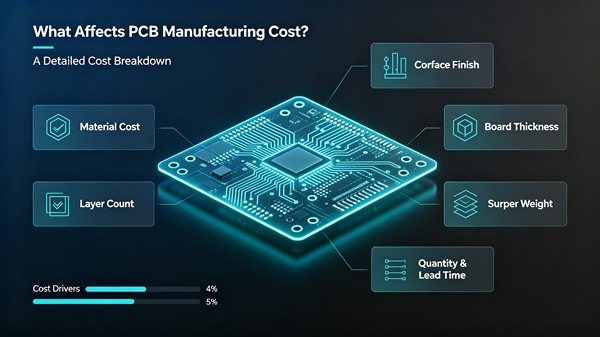
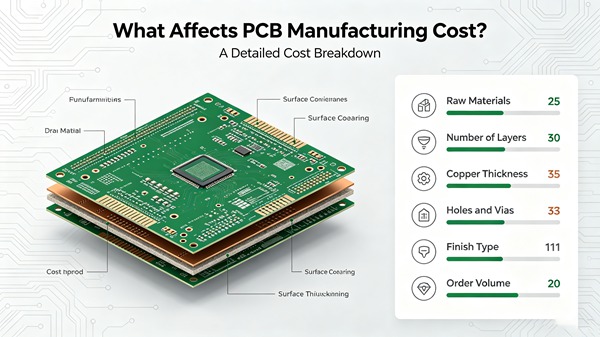
Entre los principales factores que influyen en los costes suelen figurar:
- Número de capas
- Dimensiones de la tabla
- Selección de materiales
- Peso del cobre
- Número de orificios y requisitos de perforación
- Ancho mínimo de las pistas y espaciado mínimo
- Acabado superficial
- Espesor de la PCB
- Procesos especiales de fabricación
- Cantidad de producción
Comprender estos factores facilita la comparación de presupuestos y permite identificar en qué aspectos se puede reducir realmente el coste.
Índice
El número de capas es uno de los principales factores que influyen en los costes
Aumentar el número de capas de una placa de circuito impreso suele incrementar el coste de fabricación.
La secuencia de fabricación de una placa de circuito impreso de dos capas es relativamente sencilla. Una placa de circuito impreso multicapa requiere además:
- Imágenes de capas internas
- Laminación
- Perforación
- Revestimiento
- Inspección
- Control de inscripciones
Por ejemplo, pasar de una placa de cuatro capas a una de ocho no es simplemente cuestión de añadir cuatro capas de cobre. Las etapas adicionales de laminación y procesamiento también aumentan el tiempo de fabricación y la complejidad de la producción.
Véase también: Fabricación de placas de circuito impreso multicapa
Sin embargo, la reducción del número de capas no debe considerarse una medida automática de ahorro de costes.
Un menor número de capas puede requerir:
- Rutas más complicadas
- Dimensiones de la placa más grandes
- Más vías
- Otros problemas relacionados con la integridad de la señal
El objetivo correcto es el el menor número posible de capas que cumpla los requisitos eléctricos y mecánicos.
El material de los PCB influye directamente en el coste
El FR-4 estándar suele ser más económico que los materiales especializados.
Dependiendo de la aplicación, los ingenieros pueden necesitar:
- FR-4 estándar
- FR-4 de alta Tg
- Laminados de baja pérdida
- Materiales a base de PTFE
- Materiales de alta frecuencia
- Sustratos de núcleo metálico
La elección de los materiales influye tanto en el precio de la materia prima como en el proceso de fabricación.
En los diseños de alta velocidad o de radiofrecuencia, elegir un laminado más barato con el único fin de reducir el coste de la placa de circuito impreso puede acarrear problemas relacionados con:
- Pérdida dieléctrica
- Estabilidad de la impedancia
- Rendimiento térmico
- Integridad de la señal
Véase también: Selección de materiales para placas de circuito impreso de alta frecuencia
Por lo tanto, el material debe seleccionarse en función de los requisitos eléctricos y ambientales reales, y no únicamente en función del precio.
El tamaño de las placas y el aprovechamiento de los paneles influyen en la eficiencia de la fabricación
Los tableros más grandes consumen más material laminado y ocupan más superficie de producción.
Sin embargo, el tamaño de la tabla no es el único factor a tener en cuenta.
Los fabricantes suelen disponer varias placas de circuito impreso en un panel de producción más grande.
Un mejor aprovechamiento de los paneles puede reducir:
- Desperdicio de material
- Gastos generales de producción
- Coste por placa
Por este motivo, un pequeño cambio en las dimensiones de las placas puede tener a veces un impacto sorprendentemente grande en el coste unitario cuando permite colocar más placas de forma eficiente en un panel de producción.
Véase también: Directrices para la panelización de placas de circuito impreso
La variación del precio del cobre modifica los requisitos de fabricación
Los diseños estándar de placas de circuito impreso suelen utilizar cobre de 1 oz, pero algunas aplicaciones requieren:
- 2 oz de cobre
- 3 oz de cobre
- 4 oz de cobre
- Estructuras pesadas de cobre
A medida que aumenta el espesor del cobre, también lo hacen los requisitos en cuanto a material y procesamiento.
El cobre de gran espesor también puede requerir ajustes en:
- Grabado
- Revestimiento
- Geometría de traza
- Gestión térmica
Sin embargo, en el caso de la electrónica de potencia, el coste adicional puede estar justificado por los requisitos eléctricos y térmicos.
Véase también: Diseño de placas de circuito impreso para electrónica de potencia para vehículos eléctricos
El tamaño de la broca y el número de agujeros son importantes
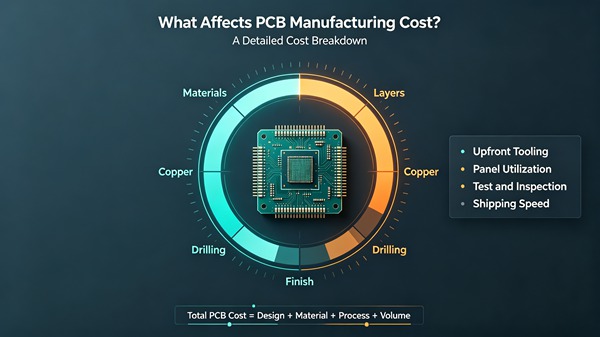
La perforación es otro factor importante en los costes de fabricación.
Una placa que contenga cientos de orificios pasantes estándar suele ser más fácil de fabricar que una que requiera un gran número de orificios muy pequeños.
El coste puede aumentar cuando un diseño requiere:
- Taladros mecánicos muy pequeños
- Microvías láser
- Vías ciegas
- Vías enterradas
- Taladrado inverso
- Agujeros de alta relación de aspecto
El número de agujeros también influye en el tiempo de perforación y en el rendimiento de la producción.
Las estructuras HDI aumentan la complejidad
La tecnología HDI puede aumentar considerablemente el coste de fabricación de las placas de circuito impreso, ya que puede requerir:
- Perforación con láser
- Laminado secuencial
- Relleno de microvías
- Recubrimiento adicional
- Un control más estricto del registro
Por lo tanto, el HDI debería utilizarse cuando aporte una ventaja real en el diseño, como por ejemplo:
- Tamaño de placa más pequeño
- Trazado de BGA de paso fino
- Mayor densidad de enrutamiento
- Reducción del número de capas
Véase también: Fabricación de PCB de IDH
Utilizar HDI simplemente porque el diseño lo permite puede aumentar innecesariamente los costes de fabricación.
El acabado de la superficie influye en el precio de las placas de circuito impreso
Los acabados superficiales más comunes son:
- HASL
- HASL sin plomo
- ENIG
- Plata de inmersión
- Estanque de inmersión
- OSP
El proceso ENIG suele ser más caro que el HASL convencional debido a sus pasos de procesamiento adicionales y a los requisitos de material.
No obstante, el acabado superficial debe seleccionarse en función de los requisitos de montaje y fiabilidad.
Por ejemplo, los componentes de paso fino y determinadas aplicaciones de contacto pueden beneficiarse de un acabado superficial más liso.
Elegir el acabado más barato no es necesariamente la decisión más económica si ello conlleva problemas de montaje más adelante.
Requisitos de espesor y tolerancia de los PCB
Los espesores estándar de los tableros suelen ser más económicos que las especificaciones poco habituales.
Pueden surgir costes adicionales por:
- Espesor no estándar
- Tolerancia de espesor muy ajustada
- Espesor especial del dieléctrico
- Requisitos de impedancia compleja
Si un diseño no requiere un grosor inusual, el uso de una estructura de material estándar puede simplificar la producción.
Las estrictas normas de diseño aumentan los costes de fabricación
La fabricación se complica cuando un diseño se acerca a los límites del proceso del proveedor.
Algunos ejemplos son:
- Trazas extremadamente estrechas
- Espaciado muy pequeño
- Pequeños anillos anulares
- Pequeños orificios mecánicos
- Tolerancias de registro muy estrictas
Estos requisitos podrían aumentar:
- Dificultad de producción
- Riesgo de desecho
- Requisitos de inspección
- Tiempo de fabricación
Por eso es importante tener en cuenta el DFM antes de que el diseño pase a producción.
La impedancia controlada puede influir en el coste de las placas de circuito impreso
La impedancia controlada, por sí sola, no hace que una placa de circuito impreso sea necesariamente cara.
El impacto en los costes depende de cómo influya el requisito de impedancia en la construcción.
Por ejemplo, es posible que los ingenieros tengan que especificar:
- Espesor dieléctrico específico
- Espesor controlado del cobre
- Ancho preciso de la pista
- Laminado especializado
Unas tolerancias de impedancia más exigentes también pueden requerir pruebas adicionales y un mayor control del proceso.
El volumen de producción modifica el coste unitario
Por lo general, la fabricación de placas de circuito impreso resulta más económica a medida que aumenta el volumen de producción.
Un pedido de prototipos de pequeña cuantía puede acarrear costes relativamente elevados debido a:
- Preparación técnica
- Herramientas
- Configuración
- Manipulación de materiales
Estos costes se reparten entre un mayor número de placas cuando las tiradas de producción son más grandes.
Sin embargo, aumentar la cantidad únicamente para conseguir un precio unitario más bajo no siempre es una decisión sensata desde el punto de vista económico.
En el caso de los proyectos en fase inicial, suele ser mejor fabricar una cantidad menor, validar el diseño y, a continuación, aumentar el volumen una vez que el diseño se haya estabilizado.
Los requisitos de ensayo pueden aumentar los costes
Las pruebas eléctricas básicas de las placas de circuito impreso (PCB) son diferentes de la certificación avanzada de fiabilidad.
Otras pruebas pueden incluir:
- Pruebas con sonda móvil
- Inspección óptica automatizada
- Inspección por rayos X
- Análisis transversal
- Ciclos térmicos
- Pruebas de impedancia
El nivel de inspección adecuado depende de la aplicación.
Una placa prototipo sencilla no requiere necesariamente el mismo proceso de homologación que una placa de control para el sector de la automoción.
Cómo reducir los costes de fabricación de placas de circuito impreso sin sacrificar la calidad
1. Utiliza materiales estándar siempre que sea posible
Si el FR-4 estándar cumple los requisitos eléctricos y térmicos, puede que no haya motivos para especificar un material más caro.
2. Evita el uso de capas innecesarias
Revisa la disposición de capas y el trazado antes de aumentar el número de capas.
3. Utilizar espesores estándar para los tableros
Las construcciones estándar suelen ser más fáciles de fabricar para los fabricantes.
4. Evita las reglas de diseño extremas
No diseñes productos que se acerquen innecesariamente al límite mínimo de capacidad de fabricación.
5. Optimizar la panelización
Las dimensiones de los tableros deben revisarse junto con la utilización de los paneles de producción.
6. Selecciona el acabado superficial en función de la aplicación
No elijas automáticamente el acabado más caro.
7. Ten en cuenta el coste total en lugar del precio unitario
El presupuesto más barato para una placa de circuito impreso no tiene por qué suponer el coste total más bajo.
Una placa de mala calidad puede aumentar:
- Revisión del montaje
- Tiempo de depuración
- Chatarra
- Retrasos en la entrega de los productos
Guía práctica: Cómo revisar un presupuesto de placas de circuito impreso
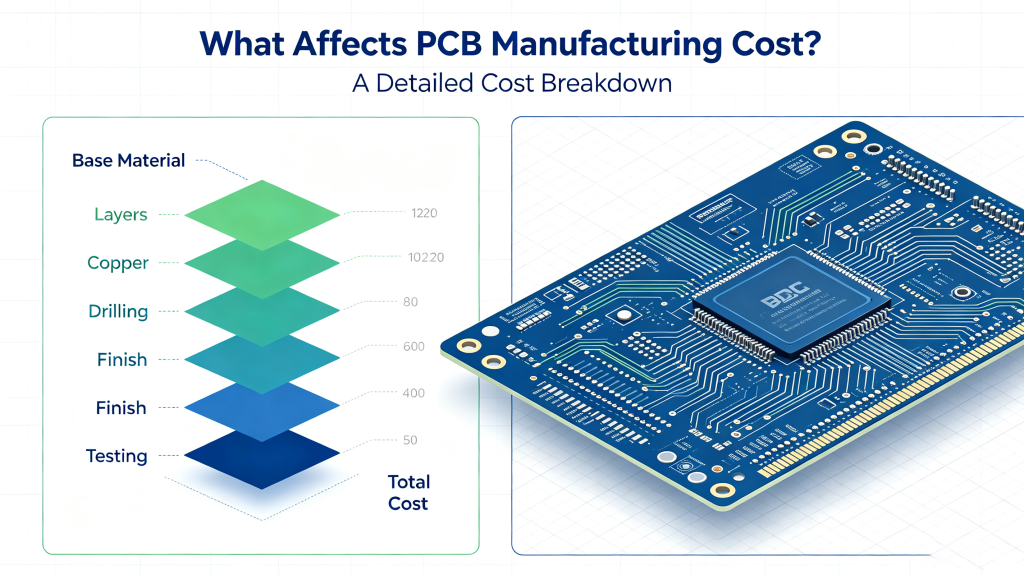
A la hora de comparar presupuestos de placas de circuito impreso, comprueba los siguientes aspectos.
Paso 1: Confirmar las especificaciones básicas
Comprueba:
- Número de capas
- Dimensiones de la tabla
- Espesor
- Peso del cobre
- Material
Paso 2: Comprobar los procesos especiales
Busca:
- Vías ciegas
- Vías enterradas
- Microvías
- Taladrado inverso
- Cobre pesado
- Impedancia controlada
Paso 3: Comparar el acabado de la superficie
Asegúrate de que todos los proveedores indiquen el mismo acabado en sus presupuestos.
Paso 4: Consultar los requisitos de las pruebas
Confirma si el presupuesto incluye:
- Pruebas eléctricas
- AOI
- Pruebas de impedancia
- Otras inspecciones solicitadas
Paso 5: Comparar los plazos de entrega
Es posible que un precio más bajo no resulte útil si provoca retrasos inaceptables.
Paso 6: Comparar el coste total
Piénsalo:
Precio de la placa de circuito impreso + utillaje + pruebas + envío + posibles retoques
en lugar de limitarse a comparar el precio unitario de la placa.
Ejemplo de coste de una placa de circuito impreso
Consideremos dos tableros con las mismas dimensiones externas.
Tablero A
- 4 capas
- FR-4 estándar
- 1 oz de cobre
- Orificios pasantes estándar
- HASL
- Tolerancias estándar
Tablero B
- 8 capas
- Material con alta Tg
- 2 oz de cobre
- Microvías
- Impedancia controlada
- ENIG
- Tolerancias dimensionales muy estrictas
Aunque las placas puedan parecer similares desde fuera, la placa B requiere un procesamiento considerablemente mayor y un control del proceso más estricto.
Esto ilustra por qué El precio de una placa de circuito impreso no se puede calcular con precisión basándose únicamente en el tamaño de la placa..
FAQ
R: El número de capas, el material, el tamaño de la placa, el peso del cobre, la complejidad de fabricación y la cantidad producida se encuentran entre los factores más importantes.
R: En general, sí, aunque en ocasiones las capas adicionales pueden simplificar el trazado y reducir otros requisitos de fabricación.
R: Por lo general, sí. El proceso ENIG requiere procesos y materiales adicionales para el acabado de la superficie.
R: Empieza por revisar el número de capas, la selección de materiales, las dimensiones de la placa, el aprovechamiento de los paneles, los requisitos de taladrado y las restricciones de tolerancia innecesarias.
R: No necesariamente. Los problemas de calidad, los retrasos en la entrega y las dificultades de montaje pueden hacer que un precio inicial bajo resulte más caro en términos generales.
Conclusión
La interacción entre el diseño, los materiales, los procesos de fabricación, los requisitos de ensayo y el volumen de producción determina el coste de fabricación de las placas de circuito impreso.
La forma más eficaz de reducir los costes no consiste simplemente en buscar el presupuesto más barato. Por el contrario, los ingenieros deben detectar la complejidad innecesaria y optimizar el diseño antes de la producción.
Una estrategia práctica para reducir costes consiste en:
- Utiliza materiales adecuados
- Optimizar el número de capas
- Simplificar los elementos de fabricación innecesarios
- Mejorar el aprovechamiento de los paneles
- Utiliza tolerancias realistas
- Adaptar los requisitos de ensayo a la aplicación
Este enfoque permite reducir los costes de fabricación de los circuitos impresos, al tiempo que se mantienen los requisitos eléctricos, mecánicos y de fiabilidad del producto final.
 ES
ES  EN
EN  PT
PT  AR
AR  DE
DE  FR
FR