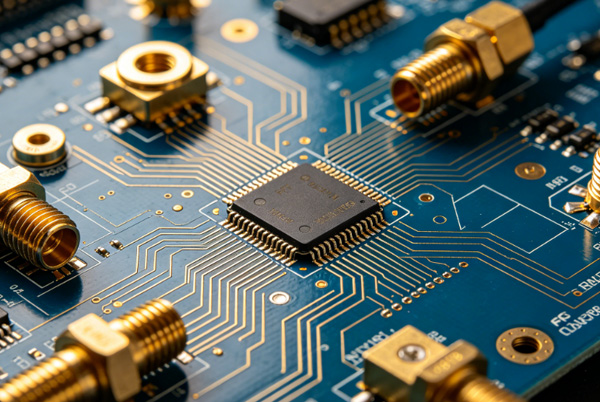
As communication systems continue moving toward higher data rates and higher operating frequencies, standard PCB fabrication methods are often no longer sufficient.
Applications such as:
- RF communication
- 5G infrastructure
- Radar systems
- Automotive electronics
- High-speed networking
require specialized high frequency PCB manufacturing to maintain stable electrical performance.
Choosing the right high frequency PCB supplier is critical because material selection, impedance control, and fabrication precision directly affect signal integrity and long-term reliability.
TOPFAST supports high frequency PCB fabrication with controlled process management and engineering-focused impedance and stack-up review.
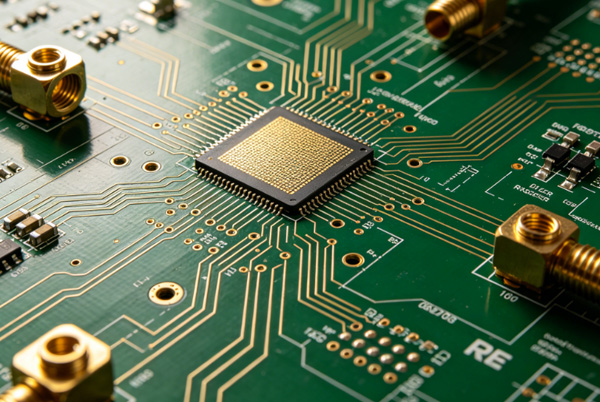
Table of Contents
What Is a High-Frequency PCB?
A high frequency PCB is designed for circuits operating at elevated frequencies where signal loss, dielectric performance, and impedance stability become critical.
Compared with standard FR4 boards, high frequency PCBs often use specialized materials with:
- Lower dielectric loss
- Stable dielectric constant (Dk)
- Improved thermal stability
Typical applications include:
- RF modules
- Microwave systems
- Antenna circuits
- High-speed digital systems
- Satellite communication equipment
Why High Frequency PCB Supplier Selection Matters
At high frequencies, even small manufacturing variations can affect:
- Signal integrity
- Return loss
- Transmission efficiency
- Electromagnetic interference (EMI)
Poor process control may lead to:
- Impedance mismatch
- Signal attenuation
- Unstable RF performance
A qualified high frequency PCB supplier helps reduce these risks through controlled fabrication and advanced engineering review.
Key Capabilities of a High Frequency PCB Supplier
1. Advanced Material Support
High frequency designs commonly require materials such as:
- Rogers laminates
- PTFE-based substrates
- Low-loss hydrocarbon materials
- High Tg RF laminates
Material consistency directly affects RF stability and signal performance.
2. Controlled Impedance Manufacturing
Impedance consistency is one of the most critical factors in RF PCB fabrication.
Suppliers should control:
- Trace geometry
- Dielectric thickness
- Copper roughness
- Layer alignment
Internal Link: Multilayer PCB Supplier – Many RF boards use multilayer structures for signal and ground isolation.
3. Precision Etching Capability
Fine RF routing requires tight manufacturing tolerance for:
- Line width accuracy
- Spacing consistency
- Edge definition
Even small deviations may affect high-speed signal behavior.
4. Thermal and Mechanical Stability
High frequency applications often operate in demanding thermal environments.
Suppliers must manage:
- PCB expansion behavior
- Material compatibility
- Thermal stress during reflow
Internal Link: PCB Warpage and Reflow Deformation – Thermal stability affects RF assembly reliability.
5. Engineering and Stack-Up Support
Reliable suppliers should provide:
- Stack-up optimization
- Signal integrity review
- Material selection guidance
- Manufacturability feedback
Common Challenges in High Frequency PCB Manufacturing
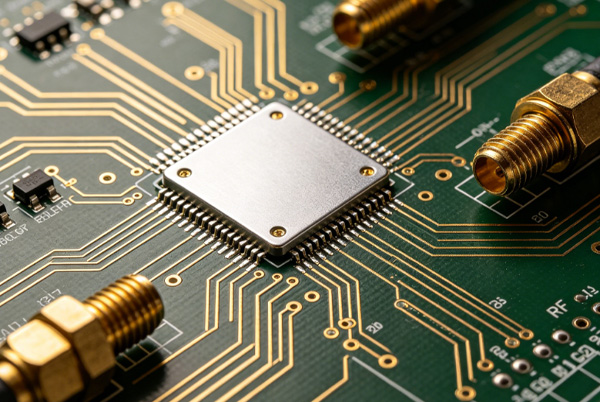
Signal Loss and Dielectric Variation
Inconsistent dielectric properties may increase:
- Insertion loss
- Reflection
- Signal degradation
Copper Surface Roughness
Copper texture can significantly affect RF signal performance at high frequencies.
Impedance Inconsistency
Variations in manufacturing may create unstable transmission characteristics.
Material Processing Complexity
RF materials often require specialized drilling, lamination, and handling procedures.
How-To: Choose a High Frequency PCB Supplier
- Step 1: Verify RF Material Capability
Review:
. Supported laminate brands
. Material inventory stability
. Experience with RF substrates - Step 2: Evaluate Impedance Control Experience
Ask about:
. Impedance tolerance capability
. Test coupon validation
. Process calibration methods
Internal Link: PCB Supplier Selection Guide – Quality systems are essential for controlled impedance manufacturing. - Step 3: Review Fabrication Precision
Critical areas include:
. Etching tolerance
. Registration accuracy
. Layer alignment - Step 4: Validate Engineering Support
Reliable RF PCB suppliers should support:
. Signal integrity optimization
. Stack-up planning
. DFM analysis - Step 5: Assess Production Stability
Prototype success alone is not enough.
Evaluate:
. Yield consistency
. Material traceability
. Long-term process stability
Related: Global PCB Supplier Comparison – Different suppliers vary significantly in RF capability.
Discuss Your RF PCB Project with TOPFAST – Reliable high frequency PCB manufacturing with engineering-focused support.
High Frequency PCB vs Standard FR4 PCB
| Feature | Standard FR4 PCB | High Frequency PCB |
|---|---|---|
| Dielectric loss | Higher | Lower |
| Signal performance | Standard | Optimized |
| Material cost | Lower | Higher |
| Impedance stability | Moderate | High |
| RF suitability | Limited | Excellent |
| Manufacturing complexity | Lower | Higher |
Best Practices for High Frequency PCB Design
- Minimize signal discontinuities
- Optimize ground reference structures
- Use controlled impedance routing
- Select low-loss materials carefully
- Collaborate with fabrication engineers early
Frequently Asked Questions (FAQ)
A high frequency PCB supplier manufactures boards designed for RF and high-speed electronic applications.
Low-loss laminates and specialized substrates require more advanced manufacturing and material technology.
Telecommunications, automotive radar, aerospace, networking, and industrial RF systems.
Impedance mismatch can cause signal reflection and reduced transmission performance.
For lower frequencies, sometimes yes, but higher-frequency applications usually require specialized materials.
Conclusion
High frequency PCB manufacturing requires advanced material expertise, precision fabrication, and stable impedance control.
Choosing the right high frequency PCB supplier depends on:
- RF material capability
- Manufacturing precision
- Signal integrity expertise
- Thermal stability management
- Long-term production consistency
By working with experienced suppliers like TOPFAST, engineering teams can improve RF performance and support reliable high-speed electronic system development.
Request High Frequency PCB Manufacturing Support from TOPFAST – Precision fabrication for RF and high-speed electronics.
 EN
EN  PT
PT  AR
AR  DE
DE  FR
FR  ES
ES