
PCB prototyping is one of the most important stages in electronics product development. Before scaling to production, engineers must validate:
- Electrical functionality
- Signal integrity
- Thermal performance
- Manufacturability
A reliable prototype PCB supplier helps accelerate this process by providing fast fabrication, engineering review, and stable manufacturing quality.
TOPFAST supports prototype PCB projects with rapid manufacturing workflows and fabrication-focused DFM analysis to help teams reduce iteration cycles.

Table of Contents
Why Prototype PCB Manufacturing Matters
Prototype boards are used to:
- Validate new designs
- Test hardware functionality
- Verify mechanical fit
- Evaluate manufacturability before production
Errors discovered during prototyping are significantly less expensive than defects identified during mass production.
Key Capabilities of a Prototype PCB Supplier
1. Fast Turnaround Time
Rapid prototyping helps shorten development cycles.
Important factors include:
- Fast CAM processing
- Efficient tooling setup
- Stable production scheduling
However, speed should not compromise fabrication quality.
2. Engineering Review and DFM Support
Good suppliers provide fabrication-oriented DFM feedback, such as:
- Trace width concerns
- Annular ring limitations
- Impedance control risks
- Stack-up optimization suggestions
Internal Link: PCB Manufacturing Process – Understanding fabrication limitations improves prototype success.
3. Flexible Material Options
Prototype projects may require:
- Standard FR4
- High Tg laminates
- High-frequency materials
- Aluminum PCBs
4. Precision Manufacturing Capability
Prototype boards often include:
- Fine-pitch routing
- Dense BGA fanout
- HDI structures
Related: BGA Assembly Supplier Guide – Fabrication precision directly affects assembly success.
5. Consistent Quality Control
Even prototype boards require:
- Electrical testing
- AOI inspection
- Dimensional verification
- Controlled surface finishing
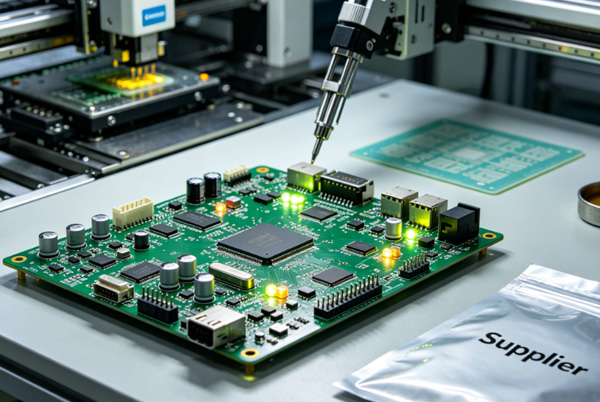
How-To: Improve Prototype PCB Success
- Step 1: Optimize Stack-Up Early
. Define impedance requirements
. Balance copper distribution
. Reduce warpage risk
Internal Link: PCB Warpage and Reflow Deformation – Stack-up affects thermal stability. - Step 2: Simplify the First Revision
Avoid adding unnecessary complexity in early validation stages.
Focus on:
. Core functionality
. Key interfaces
. Critical signal paths - Step 3: Communicate Requirements Clearly
Provide:
. Gerber files
. Fabrication drawings
. Stack-up requirements
. Controlled impedance specifications - Step 4: Validate Manufacturability
Review:
. Hole sizes
. Trace spacing
. Copper balancing
. Surface finish compatibility - Step 5: Plan for Iteration
Most hardware projects require multiple prototype revisions.
A flexible supplier relationship helps accelerate redesign cycles.
Start Your PCB Prototype with TOPFAST – Fast fabrication with engineering-focused review.
Common Challenges in Prototype PCB Manufacturing
1. Design Rule Violations
Extremely fine routing may exceed manufacturing capability.
2. Material Availability
Special laminates may increase lead time.
3. Warpage and Thermal Issues
Uneven copper distribution can affect assembly reliability.
4. Signal Integrity Problems
Incorrect stack-up planning may cause impedance inconsistency.
5. Transition to Production
Prototype success does not automatically guarantee production stability.
Internal Link: PCB Supplier Selection Guide – Long-term manufacturing capability matters beyond prototyping.
Best Practices for Prototype PCB Projects
- Use fabrication-oriented DFM checks
- Standardize stack-up where possible
- Validate critical interfaces first
- Maintain documentation across revisions
- Collaborate closely with fabrication engineers
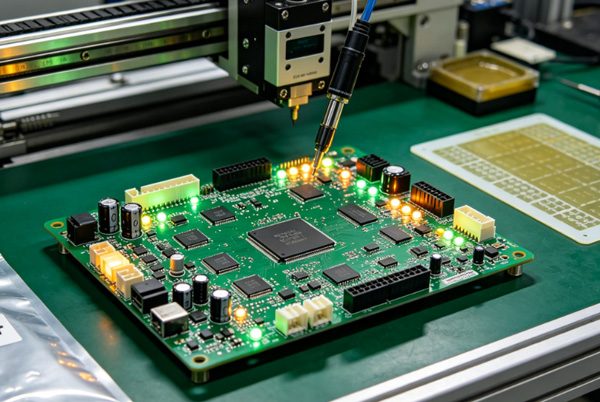
Prototype PCB Supplier vs Production PCB Supplier
| Area | Prototype Supplier | Production Supplier |
|---|---|---|
| Priority | Speed & flexibility | Stability & scalability |
| Volume | Small batch | Medium to mass production |
| Engineering interaction | High | Structured |
| Iteration frequency | Frequent | Lower |
Frequently Asked Questions (FAQ)
A: It is the fabrication of early-stage boards used for design validation and testing.
A: Depending on complexity, prototype boards may be produced within days.
A: Yes, they are primarily intended for electrical and mechanical validation.
A: DFM helps identify manufacturability issues before fabrication begins.
A: Experienced suppliers with advanced fabrication capability can.
Conclusion
Prototype PCB manufacturing plays a critical role in reducing development risk and accelerating product validation.
Choosing the right prototype PCB supplier requires evaluating:
- Turnaround capability
- Engineering support
- Fabrication precision
- Material flexibility
- Quality consistency
By working with experienced suppliers like TOPFAST, engineering teams can improve prototype quality, reduce redesign cycles, and create a smoother transition into mass production.
Request a Prototype PCB Quote from TOPFAST – Accelerate your hardware development process.
 EN
EN  PT
PT  AR
AR  DE
DE  FR
FR  ES
ES