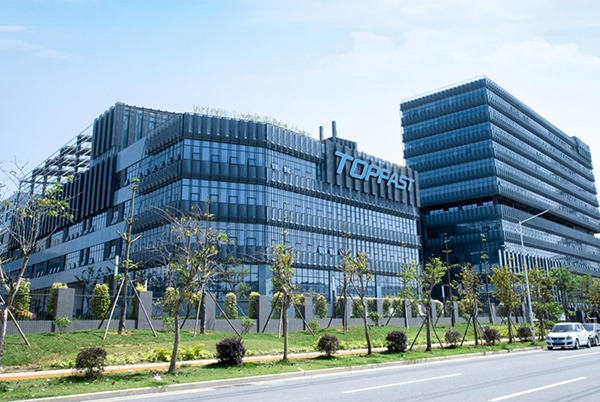
In the electronics industry, the terms PCB manufacturer and PCB supplier are frequently used interchangeably. However, they do not always mean the same thing.
Some companies operate their own fabrication facilities, while others focus on sourcing, coordination, and supply chain management without directly manufacturing boards.
Understanding this distinction is important when selecting partners for prototyping, production, and long-term supply chain stability.
TOPFAST supports both PCB fabrication and integrated supply coordination, helping customers simplify sourcing and improve manufacturing consistency.

Table of Contents
What Is a PCB Manufacturer?
A PCB manufacturer directly fabricates printed circuit boards using in-house production equipment and controlled manufacturing processes.
Typical manufacturing capabilities include:
- Inner layer imaging
- Lamination
- Drilling and plating
- Surface finishing
- Electrical testing
PCB manufacturers usually control:
- Process engineering
- Quality systems
- Production scheduling
- Material management
Internal Link: PCB Manufacturing Process – Complete overview of PCB fabrication stages.
What Is a PCB Supplier?
A PCB supplier may or may not own fabrication facilities.
Instead, suppliers often focus on:
- Project management
- Supply chain coordination
- Technical communication
- Vendor integration
- Logistics management
Some PCB suppliers work with multiple fabrication factories depending on:
- Technology requirements
- Production volume
- Regional capacity
Key Differences Between PCB Manufacturers and PCB Suppliers
| Area | PCB Manufacturer | PCB Supplier |
|---|---|---|
| Owns factory | Usually yes | Not always |
| Focus | Fabrication | Supply coordination |
| Process control | Direct | Depends on factory partners |
| Flexibility | Moderate | Often higher |
| Technology specialization | Strong in specific processes | Broader sourcing options |
| Logistics management | Limited | Often stronger |
When to Work with a PCB Manufacturer
Working directly with a PCB manufacturer is beneficial when:
- Tight process control is required
- Specialized technology is needed
- High-volume production is planned
- Stable long-term manufacturing is critical
Examples include:
- Automotive electronics
- Industrial control systems
- High-frequency RF boards
Internal Link: Automotive PCBA Supplier – High-reliability applications require tighter process management.
When to Work with a PCB Supplier
PCB suppliers are often valuable when:
- Multiple technologies are required
- Flexible sourcing is important
- Logistics coordination is complex
- Rapid prototyping across different factories is needed
Suppliers may also help optimize:
- Cost structure
- Delivery scheduling
- Factory selection
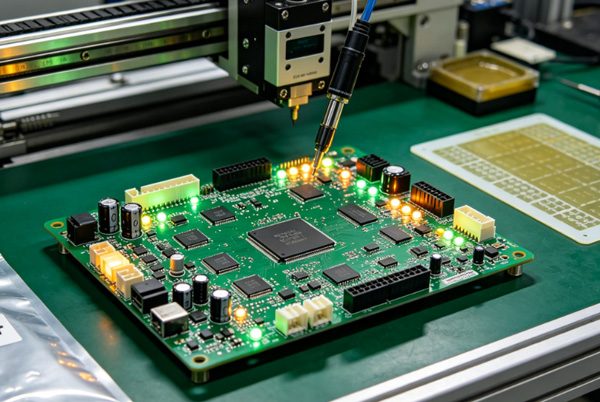
How-To: Choose the Right Partner
- Step 1: Define Project Complexity
Simple prototype projects may prioritize:
. Speed
. Cost
. Flexibility
Production projects may prioritize:
. Stability
. Traceability
. Process consistency - Step 2: Evaluate Technical Requirements
Consider:
. Layer count
. Material type
. HDI requirements
. Controlled impedance - Step 3: Understand Supply Chain Structure
Ask:
. Does the supplier own the factory?
. Which processes are outsourced?
. How is quality controlled? - Step 4: Review Engineering Support
Reliable partners should provide:
. DFM feedback
. Stack-up suggestions
. Manufacturability review
Internal Link: PCB Supplier Selection Guide – Helps evaluate manufacturing capability. - Step 5: Compare Long-Term Scalability
Evaluate whether the partner can support:
. Prototype builds
. Pilot production
. Mass manufacturing
Related: Prototype PCB Supplier – Prototype and production requirements differ significantly.
Talk with TOPFAST About Your PCB Project – Get fabrication and sourcing support tailored to your production goals.
Hybrid Models in Modern PCB Supply Chains
Today, many companies combine both roles.
For example:
- Fabrication may be partially in-house
- Specialized technologies may be outsourced
- Final supply coordination is centralized
This hybrid approach improves:
- Capacity flexibility
- Delivery resilience
- Technology coverage
Common Misunderstandings
“Factory Ownership Always Means Better Quality”
Not necessarily. Quality depends on:
- Process management
- Engineering systems
- Quality control discipline
“Suppliers Have Less Technical Capability”
Some suppliers provide strong engineering support and access to broader manufacturing resources.
“Direct Factory Is Always Cheaper”
Additional coordination, logistics, and communication costs may offset pricing advantages.

Best Practices for PCB Sourcing
- Evaluate capability, not just business model
- Verify process control systems
- Assess communication quality
- Build long-term supplier relationships
- Prioritize engineering collaboration
Internal Link: Long-Term PCBA Supplier Relationship – Stable cooperation improves manufacturing efficiency.
Frequently Asked Questions (FAQ)
A: Not always. The best choice depends on project complexity, sourcing needs, and production goals.
A: Yes. Many suppliers offer integrated PCB fabrication and assembly solutions.
A: Ask directly about fabrication capability, facility ownership, and outsourced processes.
A: Flexible suppliers are often effective for rapid prototype sourcing.
A: Quality consistency, engineering support, communication, and production reliability.
Conclusion
PCB manufacturers and PCB suppliers serve different but overlapping roles in the electronics supply chain.
Manufacturers focus on direct fabrication control, while suppliers often provide broader sourcing flexibility and coordination capability.
Choosing the right partner depends on:
- Technical requirements
- Production volume
- Supply chain complexity
- Long-term manufacturing goals
By working with experienced partners like TOPFAST, companies can combine engineering support, manufacturing stability, and supply chain flexibility for more efficient electronics production.
Request PCB Fabrication Support from TOPFAST – Flexible sourcing with engineering-focused manufacturing support.
 EN
EN  PT
PT  AR
AR  DE
DE  FR
FR  ES
ES