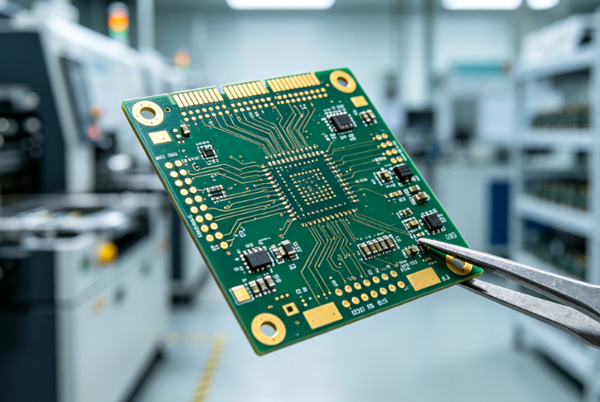
For hardware startups, selecting the right PCB supplier is not only a purchasing decision—it is a strategic part of product development.
Early-stage electronics projects often move through several phases:
- Prototype validation
- Functional testing
- Pilot production
- Market launch
- Manufacturing scale-up
Each stage creates distinct manufacturing requirements, and the supplier that supports an early prototype may not always support long-term production goals.
TOPFAST helps startups transition from early hardware validation to scalable PCB and PCBA manufacturing with engineering-focused support and stable production processes.

Table of Contents
Why PCB Supplier Selection Is Critical for Startups
Startups typically face several challenges simultaneously:
- Limited engineering resources
- Tight development schedules
- Budget constraints
- Frequent design revisions
- Supply chain uncertainty
A capable PCB supplier can help reduce risk by providing:
- Fast fabrication
- DFM review
- Stable manufacturing quality
- Flexible production capability
Key Features Startups Should Look For
1. Fast Prototype Turnaround
Speed matters during hardware development.
Rapid PCB prototyping allows startups to:
- Test ideas faster
- Validate functionality earlier
- Reduce iteration cycles
However, fast delivery should still include engineering verification.
Internal Link: Prototype PCB Supplier – Prototype speed and manufacturability must be balanced.
2. Engineering Support
Many startup teams lack dedicated manufacturing engineers.
Reliable suppliers should provide:
- DFM recommendations
- Stack-up guidance
- Manufacturability review
- Material selection support
3. Flexible Low-Volume Production
Startups often begin with:
- Small pilot runs
- Beta hardware batches
- Crowdfunding production quantities
The supplier should support smooth scaling from prototype to production.
Related: Low Volume PCBA Supplier – Critical for pilot-stage manufacturing.
4. Stable Quality Control
Poor PCB quality can delay product launches and create debugging confusion.
Key quality areas include:
- Hole registration
- Surface finish quality
- Layer alignment
- Warpage control
Internal Link: PCB Warpage and Reflow Deformation – Fabrication stability affects assembly success.
5. Cost Transparency
Startups must manage cash flow carefully.
Good suppliers provide clear pricing for:
- Fabrication
- Tooling
- Surface finish
- Shipping
- Engineering changes
Related: Cheap PCB Supplier – Low cost should not compromise reliability.
How-To: Choose the Right PCB Supplier for a Startup
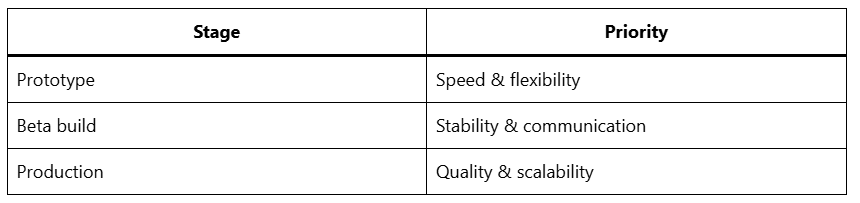
- Step 1: Define Your Development Stage
Different stages require different supplier strengths.
- Step 2: Evaluate Technical Complexity
Consider:
. Layer count
. HDI requirements
. Controlled impedance
. RF or high-speed design needs - Step 3: Test Supplier Responsiveness
Evaluate:
. Quotation speed
. Engineering communication
. DFM feedback quality
Fast and clear communication is essential during rapid product iteration. - Step 4: Start with Small Validation Orders
Before committing to larger production:
. Test PCB quality
. Verify assembly compatibility
. Evaluate delivery consistency - Step 5: Plan for Future Scaling
A supplier should support:
. Prototype builds
. Pilot runs
. Mass production transition
Internal Link: Global PCB Supplier Comparison – Different suppliers fit different growth stages.
Start Your Hardware Project with TOPFAST – Flexible PCB manufacturing support for startups and product teams.
Common Startup PCB Sourcing Mistakes
Choosing Only by Price
Ultra-low pricing may increase:
- Fabrication inconsistency
- Assembly defects
- Delays during scaling
Ignoring Manufacturability
Designs optimized only for functionality may become difficult to manufacture reliably.
Switching Suppliers Too Frequently
Changing suppliers repeatedly can create:
- Process inconsistency
- Communication delays
- Quality variation
Underestimating Supply Chain Risk
Component availability and material lead times affect production schedules significantly.
Internal Link: PCBA Supplier Risk Management – Supply chain planning is critical for startups.
Best Practices for Startup PCB Development
- Simplify initial designs
- Standardize components where possible
- Use production-oriented DFM early
- Build long-term supplier relationships
- Document every revision carefully
Frequently Asked Questions (FAQ)
A: The best supplier balances speed, engineering support, quality, and scalability.
A: Both matter, but poor quality often creates higher long-term costs.
A: Multiple revisions are common during hardware validation.
A: Some can, but scalability should be evaluated early.
A: Strong DFM and process guidance reduce development risk and accelerate validation.
Conclusion
For startups, the right PCB supplier is more than a fabrication vendor—it is a long-term manufacturing partner.
Successful supplier selection depends on:
- Fast and stable prototyping
- Engineering collaboration
- Flexible production capability
- Quality consistency
- Scalability for future growth
By working with experienced suppliers like TOPFAST, startups can reduce development risk, accelerate validation cycles, and build a more reliable path from prototype to production.
Request Startup PCB Manufacturing Support from TOPFAST – Scale your hardware project with engineering-focused production support.
 EN
EN  PT
PT  AR
AR  DE
DE  FR
FR  ES
ES