
PCB quotations often contain several different cost components.
The main PCB fabrication price is usually easy to understand.
Tooling costs are less obvious.
A quotation may contain terms such as:
- Tooling
- Setup
- Drill tooling
- Routing
- Test fixture
- Engineering charge
- Production preparation
These charges do not necessarily represent the physical cost of the finished PCB.
They are associated with preparing the manufacturing process.
For a large production order, tooling may represent only a small portion of the total cost per board.
For a small prototype order, the same fixed cost can have a much greater effect on the unit price.
Understanding this difference makes PCB quotations easier to evaluate.
Table of Contents
What Does PCB Tooling Mean?
PCB tooling generally refers to the tools, fixtures, programs, or production preparation required to manufacture and test a specific PCB.
Depending on the manufacturing process, this can include:
- Drill preparation
- Routing setup
- Tooling holes
- Production fixtures
- Electrical test fixtures
- Test programs
- Panel preparation
Not every PCB requires the same tooling.
A simple 2 layer board with standard through-holes may have relatively straightforward production preparation.
A complex multilayer PCB with special drilling, routing, or electrical testing can require considerably more preparation.
PCB Tooling Is Not One Single Cost
One reason tooling charges can be confusing is that the term covers several different activities.
Fabrication Tooling
This may include preparation for:
- Drilling
- Routing
- Imaging
- Panelization
- Mechanical processing
Electrical Test Tooling
If electrical testing requires a dedicated fixture, there may be a separate fixture or setup cost.
Assembly Tooling
For projects that include assembly, additional tooling may be required for:
- Solder paste printing
- Board support
- Assembly fixtures
- Test fixtures
The exact scope depends on the production process.
For a PCB fabrication quotation, it is useful to determine which tooling costs actually apply to the bare board.
Why Tooling Costs Are More Visible on Prototype Orders
Suppose a manufacturing setup costs $100.
If the order contains:
10 PCBs
the setup represents:
$10 per board
If the order contains:
1,000 PCBs
the same setup represents:
$0.10 per board
The actual production cost is more complicated, but the principle is important.
Fixed costs have a much greater effect on low-volume orders.
This is one reason why a prototype PCB can have a relatively high unit price even when the board itself is not particularly expensive.
This relationship is also explained in PCB Prototype Cost.
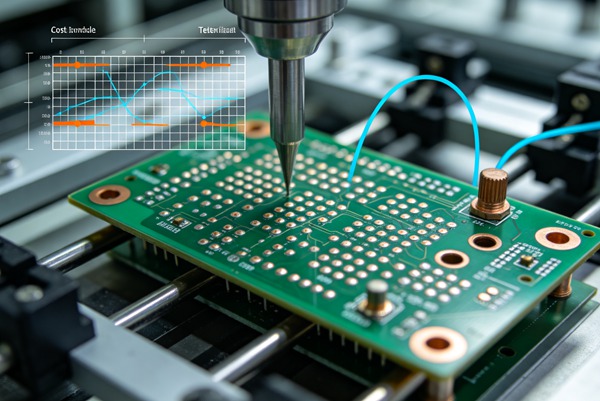
Drilling Can Affect Tooling Requirements
Drilling is one of the fundamental processes in PCB fabrication.
The production data needs to define:
- Hole locations
- Hole sizes
- Hole types
- Plated holes
- Non-plated holes
A conventional multilayer PCB may use standard mechanical drilling.
More complex designs may require:
- Very small mechanical holes
- Laser drilling
- Backdrilling
- Special via structures
As the drilling structure becomes more complicated, the manufacturing preparation becomes more demanding.
This does not mean every small hole creates a large tooling charge.
The effect depends on the complete manufacturing process.
Routing and Mechanical Tooling
Routing is used to create:
- Board outlines
- Slots
- Internal cutouts
- Irregular shapes
- Depanelization features
The board outline is therefore relevant to both manufacturing and tooling.
A simple rectangular PCB can normally be processed differently from a board with:
- Multiple internal slots
- Curved edges
- Narrow extensions
- Complex cutouts
When the mechanical design is complicated, routing time and tooling requirements may increase.
Tooling Holes
Tooling holes are used to position and handle panels during manufacturing or assembly.
They can help with:
- Machine alignment
- Panel positioning
- SMT assembly
- Inspection
Their location should be considered together with the overall panel design.
They should not interfere with:
- Components
- Copper
- Board edges
- Mounting features
For production panels, tooling holes can become part of the standard manufacturing structure.
Electrical Test Fixtures
Electrical testing is different from visual inspection.
A fixture may be used to establish electrical contact with specific test points on the PCB.
Depending on the test method, the manufacturer may need:
- A dedicated fixture
- Test probes
- A test program
- Test-point definitions
For small prototype quantities, the cost of a dedicated test fixture can be significant relative to the board price.
For larger recurring production, that same fixture cost can be distributed across many boards.
Does Every PCB Need a Test Fixture?
No.
The appropriate testing method depends on:
- Quantity
- Product risk
- PCB complexity
- Test requirements
- Customer quality requirements
Some prototype projects may use alternative inspection or testing methods rather than investing heavily in dedicated fixtures.
For higher-volume production, dedicated electrical testing may become more economical.
The important point is to match the test method to the actual production requirement.
Tooling Cost and PCB Quantity
Quantity is one of the most important variables when evaluating tooling.
Consider a simplified example:
| Order Quantity | Tooling Cost | Tooling Cost Per PCB |
|---|---|---|
| 10 | $100 | $10.00 |
| 100 | $100 | $1.00 |
| 1,000 | $100 | $0.10 |
| 10,000 | $100 | $0.01 |
The tooling cost itself has not changed in this simplified example.
Its impact on the unit price has.
This is why a customer should not judge a tooling charge only by its absolute amount.
The more useful question is:
How much does the tooling cost contribute to the total cost per PCB?
Tooling Cost vs Engineering Cost
These terms are sometimes mixed together, but they are not necessarily the same.
Tooling Cost
Usually relates to physical or process-specific preparation.
Examples include:
- Fixtures
- Drill preparation
- Routing setup
- Test fixtures
Engineering Cost
Usually relates to technical preparation.
Examples include:
- Gerber review
- DFM analysis
- CAM preparation
- Manufacturing data verification
- Stackup review
A quotation may combine these costs into one engineering or setup charge.
When comparing quotations, it is worth asking what is included rather than assuming the terminology is identical.
Why Two PCB Quotes May Have Different Tooling Charges
Different manufacturers may use different production systems.
For example, one quotation may include tooling in the basic fabrication price.
Another may list it separately.
A third may waive certain setup costs for specific order quantities.
Therefore:
Separate tooling charge ≠ automatically higher total cost
The only meaningful comparison is the final cost under equivalent technical requirements.
For a broader quotation comparison, see Why PCB Quotes Vary So Much.
How-To: Evaluate a PCB Tooling Charge
Step 1: Identify What the Charge Covers
Ask whether the tooling charge is related to:
- Fabrication
- Drilling
- Routing
- Electrical testing
- Assembly
- Engineering
Do not compare a fabrication-only tooling charge against a quotation that includes several services.
Step 2: Check Whether It Is a One-Time Cost
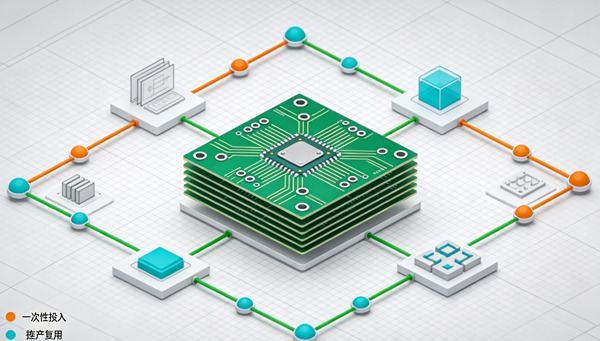
Some tooling costs are associated with the initial production setup.
If the same PCB is reordered, the tooling may not need to be recreated.
However, this depends on the manufacturing process and whether the production data or fixture changes.
Step 3: Divide the Cost by Quantity
Calculate:
Tooling cost per PCB = tooling cost ÷ order quantity
This quickly shows how important the tooling charge actually is.
Step 4: Compare Total Cost
Do not focus only on the tooling line.
Compare:
PCB fabrication + tooling + testing + shipping
under the same technical specification.
Step 5: Check Whether the Tooling Is Actually Required
Ask whether the application requires:
- Dedicated electrical testing
- Special routing
- Special drilling
- Custom fixtures
If a particular process is not required, it may be possible to simplify the manufacturing setup.
Can PCB Tooling Costs Be Reduced?
Sometimes.
The first opportunity is usually to avoid unnecessary special processes.
Use Standard Manufacturing Features
Standard hole sizes, trace geometries, and board dimensions can simplify production.
Avoid Unnecessary Mechanical Complexity
If the mechanical design permits it, simpler board outlines can reduce routing requirements.
Optimize Panelization
A good panel design can reduce the number of production operations per usable PCB.
See How PCB Panelization Affects PCB Manufacturing Cost.
Match Testing to Production Risk
Do not specify a complex test fixture if the product does not require that level of testing.
At the same time, required testing should not be removed merely to reduce cost.
Tooling Cost Should Not Be Optimized at the Expense of Quality
There is an important distinction between reducing unnecessary tooling and removing necessary manufacturing controls.
For example, eliminating an unnecessary mechanical feature may be a useful cost optimization.
But removing an electrical test that is important for a high-risk product is a different decision.
The correct question is:
Does this tooling activity control a real manufacturing or product requirement?
If yes, its cost should be evaluated as part of the quality requirement rather than treated as unnecessary overhead.
Tooling and Repeat PCB Orders
Repeat production changes the economics.
Once the PCB design and manufacturing process are stable, the manufacturer may already have:
- Production data
- Drill data
- Routing data
- Panel configuration
- Test information
This can reduce the amount of preparation needed for subsequent orders.
However, tooling should not be assumed to remain permanently valid.
Changes to:
- PCB revision
- Board outline
- Test points
- Panel configuration
- Manufacturing process
may require updated preparation or tooling.
What Happens When the PCB Revision Changes?
A PCB revision can affect tooling requirements.
For example, changing:
- Hole positions
- Board outline
- Test points
- Slots
- Panel arrangement
may require updated production data.
A small electrical change may not necessarily require completely new tooling.
A mechanical or test-related change may.
This is why revision control is important when managing recurring PCB production.
How Tooling Fits Into the Total PCB Cost
A useful way to look at the cost structure is:
PCB total cost
→ Material
→ Fabrication
→ Surface finish
→ Tooling/setup
→ Testing
→ Packaging
→ Shipping
Tooling is only one component.
Its importance depends heavily on order quantity and PCB complexity.
For prototypes, it can be relatively noticeable.
For high-volume production, it may become a very small part of the unit cost.
FAQ
PCB tooling cost covers manufacturing preparation such as drilling, routing, fixtures, panel preparation, or electrical test fixtures, depending on the project.
It can be, particularly for a dedicated fixture or initial production setup. However, tooling may need to be updated if the PCB revision or manufacturing requirements change.
Because fixed costs are spread across a small number of boards. The same tooling cost has a much smaller effect when thousands of PCBs are produced.
Some tooling costs may be included in the basic fabrication price or avoided through standard processes, but necessary manufacturing and testing preparation cannot simply be removed.
Check what each quotation includes, whether the charge is one-time or recurring, and compare the complete delivered cost under the same technical specification.
Conclusion
PCB tooling is part of the manufacturing cost structure, but it should not be viewed as an isolated surcharge.
Its impact depends mainly on:
- PCB complexity
- Manufacturing process
- Testing requirements
- Production quantity
- Panel configuration
- Whether the order is a prototype or recurring production
For small prototype orders, tooling can have a noticeable effect on the effective price per board.
For larger production runs, the same fixed cost is distributed across many units.
When comparing PCB quotations, the best approach is to understand what the tooling charge covers, determine whether it is necessary for the application, and compare the total cost under equivalent manufacturing requirements rather than focusing on one line in the quotation.
This also makes it easier to identify genuine cost-saving opportunities without removing manufacturing controls that are important to PCB quality and reliability.
 EN
EN  PT
PT  AR
AR  DE
DE  FR
FR  ES
ES