Get a Quote
OUR BLOG
Focus on the latest articles that cover topics ranging from the latest technologies to best practices and industry news for PCB.
Oct 19, 2026
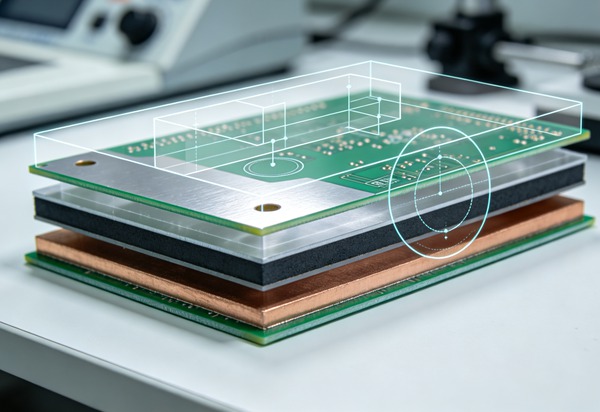
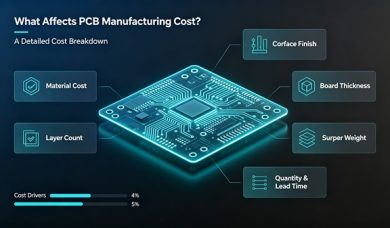
PCB thickness is often treated as a simple mechanical specification, but it can have a direct effect on manufacturing cost. A standard PCB may use a common thickness such as 1.6 mm, while other applications may require 0.8 mm, 1.0 mm, 1.2 mm, 2.0 mm, or even thicker constructions. Changing the thickness does not simply […]
Oct 13, 2026
Oct 07, 2026
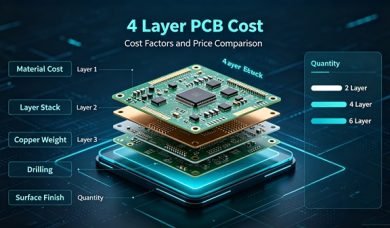
A 4 layer PCB is often the point where a design moves beyond basic two-layer fabrication and starts to require more control over routing, power distribution, and signal integrity. Its price depends on more than board size and quantity. This article looks at the main factors that determine 4 layer PCB cost and explains how engineers can reduce unnecessary expenses without compromising the design.
19
Aug
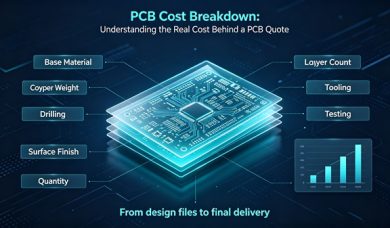
A PCB quotation is made up of several different cost components, from laminate and copper to drilling, plating, surface finishing, testing, and production setup. Understanding how these costs are calculated helps engineers compare quotations more accurately, identify unnecessary specifications, and reduce total PCB cost without compromising reliability.
14
PCB pricing is influenced by much more than board size and order quantity. Layer count, laminate selection, copper weight, drilling requirements, surface finish, tolerances, and production volume can all change the final cost. This article explains the main factors behind PCB manufacturing costs and shows how engineers can reduce unnecessary expenses without compromising board reliability.
09
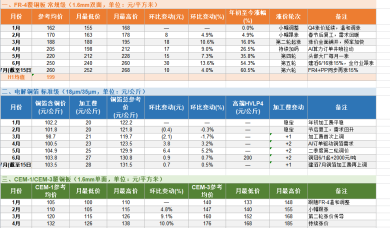
PCB material prices have increased significantly during 2026, with FR-4, copper foil, CEM materials, and high-frequency laminates all facing cost pressure. Based on industry price data through July 2026, standard FR-4 reference prices increased by approximately 60% from January to July. This article explains the main drivers behind the increase, what buyers should expect in the second half of the year, and how early material planning can reduce supply and cost risks. TOPFAST also maintains material inventory for selected PCB projects and can provide availability and purchasing information upon request.
03
20 layer PCBs are designed for complex electronic systems that require exceptional routing density, stable signal integrity, and reliable power distribution. They are widely used in AI computing, telecommunications, aerospace, medical imaging, and industrial control equipment. This guide explains stackup design, material selection, manufacturing considerations, and application scenarios for 20 layer PCBs.
29
Jul
18 layer PCBs are used in applications that require high routing density, stable signal integrity, and reliable power distribution. They are commonly found in AI servers, telecommunications infrastructure, aerospace systems, and high-performance computing platforms. This guide explains stackup structures, material options, manufacturing challenges, and design considerations for 18 layer PCBs.
24
16 layer PCBs provide extremely high routing density, outstanding signal integrity, and excellent EMI performance for advanced electronic systems. They are widely used in AI servers, telecommunications infrastructure, aerospace electronics, and high-performance computing platforms. This guide covers stackup configurations, materials, design considerations, and manufacturing challenges for reliable 16 layer PCB fabrication.
14 layer PCBs provide very high routing density, excellent signal integrity, and superior EMI performance for advanced electronic systems. They are widely used in AI servers, telecommunications infrastructure, networking equipment, aerospace systems, and industrial automation. This guide covers stackup configurations, materials, manufacturing challenges, and design considerations for reliable 14 layer PCB fabrication.
12 layer PCBs provide high routing density, superior signal integrity, and excellent EMI performance for complex electronic systems. They are widely used in AI servers, telecommunications, industrial automation, automotive electronics, and embedded computing. This guide covers stackup configurations, materials, manufacturing capabilities, and key design considerations for reliable 12 layer PCB production.
8 layer PCBs offer excellent routing density, signal integrity, and EMI performance for complex electronic designs. They are widely used in networking equipment, industrial automation, automotive electronics, servers, and medical devices.
05
6 layer PCBs provide an excellent balance between routing density, signal integrity, and manufacturing cost. They are widely used in industrial control, communication equipment, automotive electronics, and embedded systems.
01
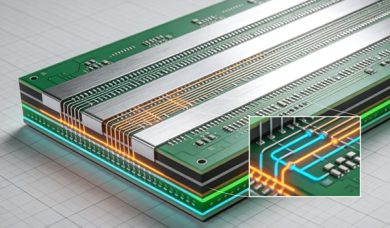
PCB stackup design directly affects signal integrity, EMI performance, impedance control, manufacturability, and long-term reliability. This guide explains stackup fundamentals, layer arrangement strategies, common multilayer configurations, and best practices for high-speed PCB design.
Jun
Load More
Layers 1 Layers 2 Layers 4 Layers 6 Layers 8 Layers 10 Layers 12 Layers 14 Layers
Dimensions (mm)
Quantity 5 10 15 20 25 30 35 40 50 75 100 100+
Thickness 0.4mm 0.6mm 0.8mm 1.0mm 1.2mm 1.6mm 2.0mm 2.4mm
Quantity
Number of Unique Parts
SMT Pads
Thru-Holes

 EN
EN  PT
PT  AR
AR  DE
DE  FR
FR  ES
ES