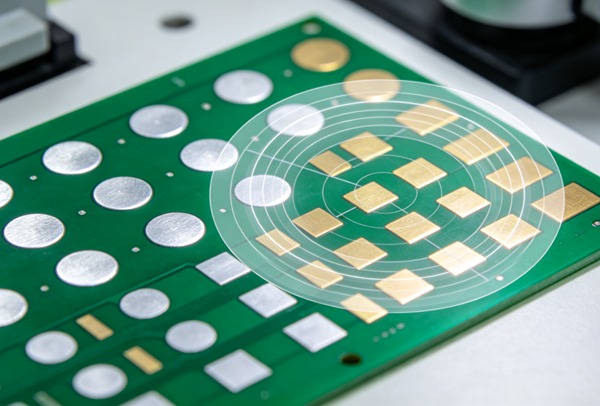
Surface finish is one specification that can noticeably affect PCB manufacturing cost.
Two PCBs with the same board size, layer count, and copper weight can still have different prices if they use different surface finishes.
The reason is straightforward: each finish requires a different manufacturing process and offers different soldering, storage, fine-pitch assembly, contact-surface, and corrosion-protection characteristics.
Common PCB surface finishes include:
- HASL
- Lead-free HASL
- ENIG
- OSP
- Immersion Silver
- Immersion Tin
- Hard Gold
- Selective gold plating
For cost-sensitive PCB designs, the important question is not simply which finish is cheapest.
The more useful question is:
Which surface finish provides the required electrical, mechanical, soldering, and storage performance at an appropriate manufacturing cost?
Table of Contents
What Is PCB Surface Finish?
PCB surface finish is the final protective layer applied to exposed copper areas.
Without an appropriate surface finish, exposed copper can oxidize and its solderability can deteriorate during storage and assembly.
The surface finish protects exposed copper and provides a suitable surface for component soldering or, in some applications, electrical contact.
The choice depends on factors such as:
- Assembly process
- Component package
- Pad geometry
- Storage period
- Environmental conditions
- Contact requirements
- Reliability requirements
- Cost target
Therefore, surface finish should be treated as part of the overall PCB manufacturing specification rather than as an isolated purchasing option.
Why Does Surface Finish Affect PCB Cost?
Different finishes require different chemicals, equipment, process steps, quality controls, and production time.
The cost can be influenced by:
- Chemical materials
- Processing time
- Surface preparation
- Thickness requirements
- Process control
- Inspection requirements
- Yield
- Board area
- Production volume
A simple finish may have a relatively low processing cost, while a more complex finish can require additional process controls.
However, the price difference between finishes also depends on the PCB itself.
For example, a small prototype with a limited quantity may show a different cost relationship from a large production order.
This is one reason a surface-finish comparison should always be made using the complete PCB specification.
HASL and Its Cost Characteristics
HASL stands for Hot Air Solder Leveling.
During the process, the PCB is coated with solder and then passed through hot air to remove excess solder from the exposed copper surfaces.
HASL has been widely used because it is relatively straightforward and economical.
Advantages of HASL
HASL can provide:
- Relatively low manufacturing cost
- Good solderability
- Established production process
- Good availability
- Practical performance for many conventional PCB designs
For cost-sensitive boards with relatively large pads and standard component packages, HASL can be a practical option.
Limitations of HASL
The process can produce a less uniform surface compared with some other finishes.
This can become more important when the PCB contains:
- Fine-pitch components
- Small pads
- Dense SMT layouts
- BGA packages
- Tight pad-to-pad spacing
For these designs, the surface flatness requirements may lead engineers toward another finish.
Lead-Free HASL Cost
Lead-free HASL uses lead-free solder materials and is common when the PCB needs to meet lead-restricted requirements.
Its cost can differ from conventional HASL because the solder material and process conditions are different.
Lead-free HASL may be appropriate when:
- RoHS compliance is required
- Standard SMT assembly is used
- The design does not require an extremely flat surface
- Cost remains an important consideration
However, the choice should be made together with the assembly process.
A low-cost PCB finish that creates difficulties during SMT assembly may increase the overall product cost.
ENIG and Why It Usually Costs More
ENIG stands for Electroless Nickel Immersion Gold.
It uses a nickel layer followed by a thin immersion gold layer.
ENIG is widely used for boards requiring a relatively flat surface, including many fine-pitch and high-density PCB designs.
Advantages of ENIG
ENIG can provide:
- Relatively flat pad surfaces
- Good solderability
- Good surface protection
- Suitable performance for fine-pitch components
- Good storage characteristics
- Compatibility with many SMT applications
The flat surface is particularly useful for applications involving fine-pitch packages and dense pad layouts.
Why ENIG Costs More
ENIG requires multiple chemical processing steps and controlled deposition of nickel and gold.
The manufacturing cost is affected by:
- Nickel processing
- Gold processing
- Chemical consumption
- Process control
- Thickness requirements
- Inspection
Gold itself is not the only reason for the higher cost.
The overall chemical process contributes to the difference.
Therefore, ENIG should be selected because its technical characteristics are needed, not simply because gold sounds more premium.
OSP and PCB Cost
OSP stands for Organic Solderability Preservative.
Instead of applying a metallic surface layer, OSP forms a protective organic coating over exposed copper.
OSP can offer a relatively economical surface-finish solution for certain PCB applications.
Advantages of OSP
OSP can provide:
- Relatively low cost
- Flat copper surfaces
- Good compatibility with SMT
- No precious-metal layer
- Suitable performance for many assembly applications
Its flat surface can be useful for fine-pitch SMT components.
Limitations of OSP
OSP does not provide the same type of long-term exposed metallic surface as ENIG.
The coating can also be affected by handling and repeated thermal processing.
Therefore, OSP needs to be evaluated according to the actual assembly process and expected product lifecycle.
Immersion Silver Cost
Immersion silver deposits a thin layer of silver over exposed copper.
It can provide a relatively flat surface and good solderability.
Applications can include:
- Fine-pitch SMT
- High-frequency designs
- Lead-free assembly
- Applications where a flat pad surface is important
Its cost is generally different from both HASL and ENIG, and the final quotation depends on board size, quantity, process requirements, and supplier capability.
For designs using immersion silver, storage and handling conditions should also be considered during the manufacturing planning stage.
Immersion Tin Cost
Immersion tin provides a thin tin-based surface over exposed copper.
Its flatness makes it suitable for certain SMT applications.
However, the finish has specific storage and handling considerations that should be reviewed during design and manufacturing.
The cost may be attractive for some applications, but the lowest surface-finish price does not necessarily result in the lowest total manufacturing cost.
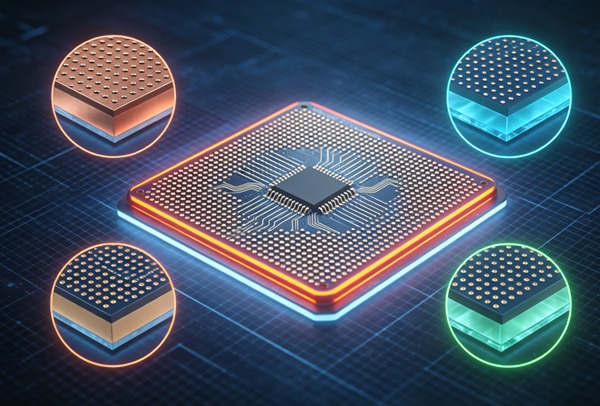
Hard Gold Is Different From ENIG
Hard gold and ENIG should not be treated as the same surface finish.
ENIG is mainly intended to provide a solderable surface.
Hard gold is commonly used when the exposed surface must withstand repeated mechanical contact.
Typical applications include:
- Edge contacts
- Gold fingers
- Key switches
- Repeated insertion interfaces
- Electrical contact surfaces
Because hard gold requires a different plating structure and process, it can have a significantly different cost from ordinary solderable finishes.
For contact applications, the gold thickness and plating area also become important cost variables.
Why Gold Thickness Matters
Not all gold specifications are equivalent.
A quotation may specify a gold surface but leave important details unclear.
Before comparing prices, check:
- Gold type
- Gold thickness
- Nickel thickness
- Plating area
- Whether the gold is intended for soldering or contact
- Selective or full-area application
For gold fingers, for example, the required thickness and plating area can have a noticeable impact on cost.
A simple statement such as “gold PCB” is therefore not sufficient for an accurate cost comparison.
Surface Finish and Fine-Pitch Components
Surface finish selection becomes more important as component pitch decreases.
Large conventional pads can tolerate more surface variation than very small SMT pads.
Fine-pitch applications may require a flatter surface to support consistent solder paste deposition and component placement.
This is one reason ENIG or OSP may be considered for certain high-density boards.
However, the decision should be based on the complete assembly process rather than component pitch alone.
Factors include:
- Pad size
- Component package
- Stencil design
- Solder paste
- Reflow profile
- Assembly yield
- Inspection requirements
Surface Finish and BGA Packages
BGA components place particular demands on PCB pad quality because many solder joints are located underneath the package.
Surface flatness and solderability can therefore become important.
For a BGA board, changing to a cheaper surface finish without reviewing the assembly process can create additional manufacturing risk.
The PCB quotation should therefore be evaluated together with the PCBA process.
If the board is still in the prototype stage, the surface finish should be specified before requesting quotations rather than allowing each supplier to quote a different finish.
Surface Finish and PCB Prototype Cost
Surface finish can represent a more noticeable part of prototype pricing when the order quantity is small.
For example, the difference between two finishes may have less impact on unit economics in a large production order than in a small prototype order.
Prototype cost also includes engineering and setup-related factors.
For a broader discussion of prototype pricing, see How Much Does PCB Prototyping Cost?.
When evaluating a prototype quotation, make sure the surface finish is identical between quotations.
Otherwise, the apparent price difference may not represent a genuine manufacturing cost difference.
Surface Finish and PCB Quote Comparison
Surface finish is one of the specifications that should be checked when comparing PCB quotations.
For example:
| Specification | Quote A | Quote B |
|---|---|---|
| Board size | Same | Same |
| Layer count | Same | Same |
| Copper weight | Same | Same |
| Board thickness | Same | Same |
| Surface finish | HASL | ENIG |
| Quantity | Same | Same |
| Testing | Same | Same |
If Quote B is more expensive, that does not necessarily indicate a higher general manufacturing price.
The surface finish itself is different.
The correct comparison is therefore based on equivalent specifications.
This principle is also important when reviewing the broader factors discussed in Why Do PCB Quotes Vary So Much?.
Surface Finish Cost by Application
Different applications may have different priorities.
General Control Boards
For conventional control boards with standard SMT or through-hole components, a cost-effective solderable finish may be sufficient.
Dense SMT Boards
For dense SMT designs, surface flatness may become more important.
ENIG or OSP can be considered depending on the assembly requirements.
BGA Boards
BGA assemblies require careful consideration of pad flatness and solderability.
The finish should be selected together with the assembly process.
Gold Finger Boards
Gold fingers require a contact-oriented plating structure rather than simply a standard solderable finish.
High-Reliability Electronics
For automotive, industrial, medical, or other reliability-sensitive products, surface finish should be evaluated together with storage, thermal cycling, assembly, and environmental requirements.
The cheapest finish should not automatically be treated as the lowest-cost solution if it introduces assembly or reliability problems later.
How to Choose a PCB Surface Finish Based on Cost
The following process can help avoid unnecessary cost.
Step 1: Identify the Assembly Requirements
Determine whether the PCB will use:
- SMT
- Through-hole assembly
- Fine-pitch components
- BGA
- Mixed technology
The assembly process determines many of the surface requirements.
Step 2: Identify Contact Requirements
Ask whether exposed copper will be used only for soldering or also for mechanical/electrical contact.
If the PCB has edge contacts or repeated insertion areas, a contact plating process may be necessary.
Step 3: Check Storage Requirements
Consider:
- Expected storage period
- Packaging
- Humidity
- Handling
- Production-to-assembly interval
Surface finish selection should account for the actual supply chain rather than only the manufacturing date.
Step 4: Compare Equivalent Quotations
Request the same surface finish from each PCB supplier when comparing prices.
Otherwise, the quotation comparison can be misleading.
Step 5: Evaluate Total Manufacturing Cost
Consider not only PCB fabrication cost but also:
- SMT yield
- Soldering performance
- Rework
- Inspection
- Storage
- Product reliability
A slightly higher PCB fabrication price may have little significance if it reduces downstream assembly problems.
How to Reduce PCB Surface Finish Cost
Use the Finish the Design Actually Requires
Avoid selecting a more expensive finish simply because it is commonly used.
For example, not every standard SMT board needs ENIG.
Avoid Full-Area Gold When Selective Plating Is Enough
If only specific contact areas require gold, selective plating may avoid unnecessary treatment of other surfaces, depending on the design and manufacturing process.
Standardize the Finish Across Similar Products
For product families with similar PCB requirements, standardizing surface finish can simplify purchasing and production.
However, the technical requirements of each board should still be checked individually.
Specify Gold Thickness Clearly
For gold-related finishes, unclear thickness requirements can make quotations difficult to compare.
A clear specification prevents suppliers from quoting different processes under the same general term.
Consider Production Volume
The cost difference between finishes can behave differently for prototypes and larger production quantities.
For this reason, surface finish should be reviewed as part of the total production economics.
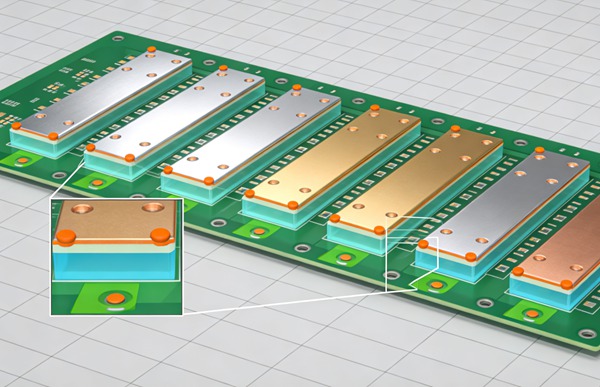
Surface Finish Should Not Be Evaluated Separately From Other PCB Costs
A PCB’s final price is determined by multiple specifications.
A simplified relationship is:
PCB Cost = Material + Layer Structure + Copper + Surface Finish + Drilling + Tooling + Testing + Panelization + Production Volume
Changing one specification can affect the others.
For example, a high-density PCB may require:
- More layers
- Fine traces
- Microvias
- ENIG
- Additional inspection
In such a case, surface finish is only one component of the overall cost.
This is why cost optimization should focus on the complete design rather than trying to minimize one line item.
Surface Finish Cost Checklist
Before sending a PCB for quotation, check:
- Surface finish is clearly specified
- Finish thickness requirements are defined where applicable
- SMT requirements have been reviewed
- BGA or fine-pitch requirements have been considered
- Gold fingers are specified separately if required
- Contact areas are identified
- Storage requirements are understood
- Prototype and production requirements are distinguished
- All suppliers are quoting the same finish
- The finish is evaluated together with the PCBA process
This prevents a common quotation problem: comparing two PCB prices when the actual surface-finish specifications are different.
Frequently Asked Questions
Cost depends on board size, quantity, manufacturing process, and supplier capabilities. HASL and some other conventional finishes are often considered economical options, but the actual quotation should be based on the complete PCB specification.
ENIG commonly has a higher processing cost than HASL because it requires additional chemical deposition processes and controlled nickel/gold layers. The actual price difference depends on the PCB design and production volume.
No. The appropriate surface finish depends on the component package, pad geometry, assembly process, storage requirements, and reliability requirements. Many SMT designs can use finishes other than ENIG.
Yes. Surface flatness, solderability, oxidation protection, and finish compatibility can affect assembly performance. The finish should therefore be selected together with the SMT or through-hole process.
Not necessarily. “Gold PCB” can refer to different processes and specifications. ENIG, hard gold, and selective gold plating have different structures, purposes, and costs, so the exact finish must be specified before comparing quotations.
Conclusion
PCB surface finish is a relatively small part of the physical PCB structure, but it can have a meaningful effect on manufacturing cost.
HASL, lead-free HASL, OSP, ENIG, immersion silver, immersion tin, and gold-based finishes each have different processing requirements and application characteristics.
For cost control, the right approach is not to choose the cheapest finish by default. Instead, start with the actual assembly and product requirements, determine the surface characteristics that are necessary, and then compare equivalent quotations.
For production PCB projects, TOPFAST can evaluate the selected surface finish together with the board stackup, copper weight, component requirements, and manufacturing specifications so that the quoted cost reflects the actual design rather than an incomplete specification.
Request a PCB Quote
Provide the Gerber files together with the required surface finish, copper weight, board thickness, quantity, and other key specifications for a more meaningful PCB cost evaluation.
Compare PCB Costs by Specification
When comparing quotations, make sure the surface finish, copper weight, layer count, material, thickness, testing, and quantity are equivalent before judging the price difference.
 EN
EN  PT
PT  AR
AR  DE
DE  FR
FR  ES
ES