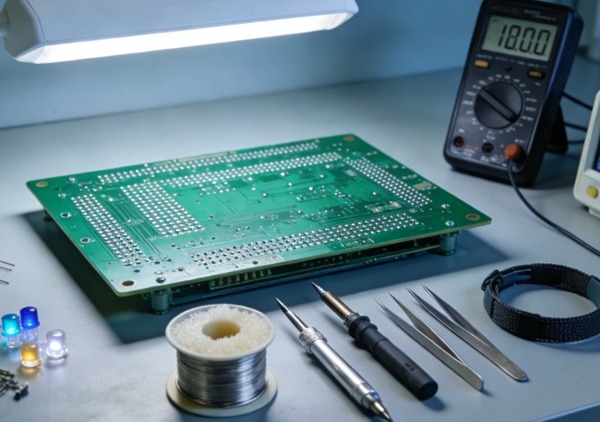
Prototype PCB assembly is a critical stage in electronics development. It transforms design concepts into physical hardware that can be tested, validated, and improved before mass production.
In this guide, TOPFAST, a professional PCB manufacturer, explains the complete prototype PCB assembly process, from design preparation to testing, cost, and best practices.
Table of Contents
What Is Prototype PCB Assembly?
Prototype PCB assembly refers to assembling a small number of PCBs for:
- Design verification
- Functional testing
- Engineering validation (EVT)
- Design iteration before production
Prototype PCBA focuses on speed, flexibility, and accuracy, rather than unit cost optimization.
Basic concept:
What Is PCB Assembly? SMT, THT, and PCBA Explained
Why Prototype PCB Assembly Is Important
Prototype PCBA allows engineers to:
- Detect design errors early
- Verify circuit functionality
- Validate component selection
- Reduce risk before mass production
Skipping proper prototyping often leads to costly redesigns later.
Prototype PCB Assembly Process
1. Design Review & File Preparation
Key files required:
- Gerber files
- BOM (Bill of Materials)
- Pick-and-Place (CPL) files
- Assembly notes
Early DFM/DFA review helps identify potential issues.
File checklist:
PCB Assembly File Requirements Explained
2. PCB Fabrication for Prototypes
Prototype PCBs typically use:
- Standard FR4 material
- Simple stack-ups
- ENIG or HASL surface finish
Fast fabrication ensures quick iteration.
Manufacturing context:
PCB Manufacturing vs PCB Assembly
3. Component Sourcing
Prototype sourcing prioritizes:
- In-stock components
- Approved alternatives
- Flexible sourcing strategies
Component availability strongly affects prototype lead time.
4. PCB Assembly (SMT & THT)
- SMT placement for most components
- Limited THT for connectors or power parts
- Manual rework if design changes are required
Assembly method comparison:
SMT vs THT PCB Assembly
5. Testing & Debugging
Testing for prototype PCBA typically includes:
- AOI inspection
- Power-on testing
- Functional testing
- Debug and rework if needed
Testing overview:
PCBA Testing Methods Explained
Prototype PCB Assembly Lead Time
Typical lead times:
- Simple prototypes: 3–5 working days
- Complex designs: 5–10 working days
Fast turn options are commonly used.
Lead time details:
PCB Assembly Lead Time Explained
Prototype PCB Assembly Cost
Prototype PCBA costs are higher per unit due to:
- Low quantity
- Set up and an engineering effort
- Component sourcing constraints
However, the prototype cost is small compared to the redesign costs.
Cost breakdown:
PCB Assembly Cost Explained
Prototype vs Production PCB Assembly
| Aspect | Prototype PCBA | Production PCBA |
|---|---|---|
| Quantity | Low | High |
| Focus | Speed & validation | Cost & efficiency |
| Component sourcing | Flexible | Optimized |
| Testing | Functional & debug | ICT / FCT |
Prototype PCBA prepares the design for smooth mass production.
Common Mistakes in Prototype PCB Assembly
- Incomplete BOMs
- No alternative components
- Missing assembly notes
- Over-optimizing cost instead of speed
Avoiding these mistakes accelerates development.
Best Practices for Successful Prototype PCBA
- Submit complete and accurate files
- Approve component alternatives
- Communicate testing requirements
- Work with an experienced manufacturer
Turnkey model:
What Is Turnkey PCB Assembly and How It Works
Industries That Rely on Prototype PCB Assembly
- Consumer electronics
- IoT devices
- Medical electronics
- Automotive electronics
- Industrial control
Prototyping enables innovation and rapid iteration.
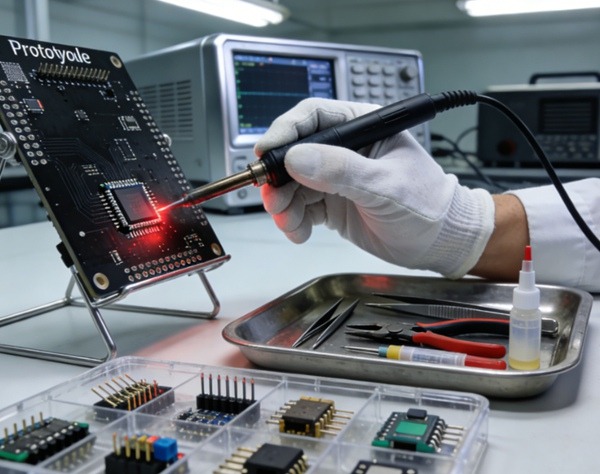
Why Choose TOPFAST for Prototype PCB Assembly?
As a professional PCB manufacturer, TOPFAST offers:
- Fast DFM/DFA review
- Flexible component sourcing
- Advanced SMT & THT assembly
- Functional testing support
- Rapid prototype turnaround
TOPFAST helps engineers move from design to validated hardware efficiently.
Conclusion
Prototype PCB assembly is the foundation of successful electronics production.
It allows engineers to validate designs, identify issues early, and reduce the risk of costly failures during mass production.
Although prototype PCBA has a higher unit cost and shorter lead times, it delivers far greater value by:
- Accelerating development cycles
- Improving product reliability
- Enabling confident transition to production
By partnering with TOPFAST, a professional PCB manufacturer, customers receive fast, accurate, and reliable prototype PCB assembly, ensuring their designs are ready for the next stage of production.
A well-executed prototype is not an expense—it is an investment in product success.
Prototype PCB Assembly FAQ
A: Usually 5–20 units, depending on testing needs.
A: No. Prototypes validate design but are not optimized for cost.
A: Not with proper file preparation and testing.
A: Yes. That is the main purpose of prototyping.
 EN
EN  PT
PT  AR
AR  DE
DE  FR
FR  ES
ES