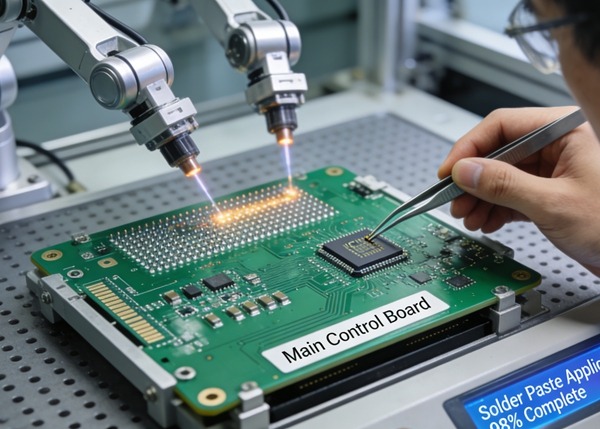
Industrial PCB assembly focuses on long-term reliability, environmental resistance, and stable performance.
Unlike consumer electronics, industrial PCBA must operate continuously under harsh conditions for many years.
In this guide, TOPFAST, a professional PCB manufacturer, explains industrial PCB assembly requirements, processes, testing standards, and best practices.
Table of Contents
What Is Industrial PCB Assembly?
Industrial PCB assembly refers to PCB assembly services designed for industrial equipment and control systems, where durability and long lifecycle support are essential.
Key characteristics include:
- Extended operating life
- Resistance to heat, vibration, and moisture
- Stable component supply
Industry overview:
Industry-Specific PCB Assembly
Typical Applications of Industrial PCB Assembly
Industrial PCBA is widely used in:
- Industrial automation systems
- PLC controllers
- Power supplies and converters
- Motor control units
- Industrial IoT devices
Reliability is prioritised over size and cost.
Key Requirements for Industrial PCB Assembly
Long-Term Reliability
Industrial electronics often operate:
- 24/7
- In high-temperature or high-vibration environments
Design and assembly must account for these conditions.
Component Lifecycle Management
Industrial PCBA requires:
- Long lifecycle components
- Obsolescence planning
- Multi-source strategies
Environmental Protection
Depending on the application:
- Conformal coating
- Moisture resistance
- Dust and corrosion protection
Industrial PCB Assembly Process
1. Design Review & DFM/DFA
Focus areas include:
- Thermal management
- Component spacing
- Mechanical stress points
Design preparation:
PCB Assembly File Requirements Explained
PCB Fabrication for Industrial Use
Industrial PCBs often require:
- Thick copper
- Multi-layer boards
- High-Tg FR4 or specialized materials
Fabrication context:
PCB Manufacturing vs PCB Assembly
Component Sourcing
Key sourcing principles:
- Authorized distributors
- Long-term availability
- Approved alternatives
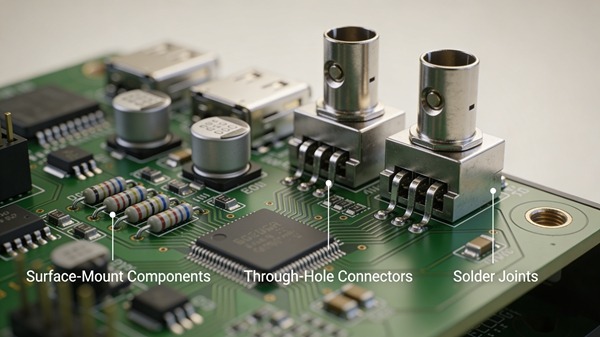
SMT & THT Assembly
Industrial PCBA often uses:
- SMT for signal processing
- THT for power components and connectors
- Selective soldering for reliability
Assembly techniques:
SMT vs THT PCB Assembly
Inspection & Testing
Testing methods include:
- AOI inspection
- X-ray inspection
- Functional testing
- Burn-in testing (optional)
Testing details:
PCBA Testing Methods Explained
Industrial PCB Assembly Volume Models
Common production models:
- Prototype PCB assembly
- Low-volume PCB assembly
- High mix, low volume PCB assembly
Production stages:
Industrial PCB Assembly Lead Time
Typical lead times:
- Standard: 10–20 working days
- Fast turn: 7–10 working days
Component availability significantly impacts delivery time.
Timing reference:
PCB Assembly Lead Time Explained
Industrial PCB Assembly Cost Considerations
Cost factors include:
- Board complexity
- Component sourcing strategy
- Testing requirements
- Environmental protection processes
Cost breakdown:
PCB Assembly Cost Explained
Common Challenges in Industrial PCB Assembly
- Heat dissipation issues
- Component obsolescence
- Environmental stress
- Long-term maintenance requirements
Choosing an experienced manufacturer reduces operational risk.
Best Practices for Industrial PCB Assembly
- Design for reliability and maintainability
- Choose long-lifecycle components
- Define environmental protection needs early
- Work with a manufacturer experienced in industrial PCBA
Service approach:
What Is Turnkey PCB Assembly and How It Works
Why Choose TOPFAST for Industrial PCB Assembly?
As a professional PCB manufacturer, TOPFAST offers:
- Reliable SMT & THT assembly
- Industrial-grade quality control
- Flexible low-volume and HMLV production
- Long-term supply chain support
- Customised testing solutions
TOPFAST understands the demands of industrial electronics manufacturing.
Conclusion
Industrial PCB assembly prioritises durability, reliability, and long-term performance over cost and speed.
From component selection to testing and environmental protection, every stage must support continuous operation in demanding conditions.
By partnering with TOPFAST, a professional PCB manufacturer, customers gain an experienced industrial PCBA partner capable of supporting prototype, low-volume, and high-mix industrial PCB assembly, ensuring stable and reliable product performance over the entire lifecycle.
Industrial PCB Assembly FAQ
A: Typically 10–20 years, depending on application and environment.
A: Not always, but recommended for harsh environments.
A: Yes. Many industrial products use low-volume or HMLV models.
A: Yes, with proper design and process planning.
 EN
EN  PT
PT  AR
AR  DE
DE  FR
FR  ES
ES