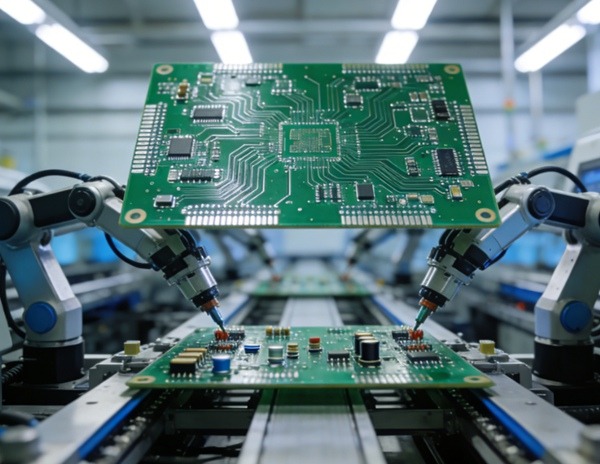
In today’s competitive electronics market, speed is often the difference between success and delay. Fast turn PCB assembly helps engineers, startups, and manufacturers shorten development cycles and accelerate time-to-market.
In this guide, TOPFAST, a professional PCB manufacturer, explains what fast-turn PCB assembly is, when it should be used, potential risks, and best practices for achieving fast delivery without sacrificing quality.
Fast turn PCB assembly refers to an expedited PCBA service designed to significantly reduce standard production lead time.
It typically focuses on:
- Rapid file review
- Priority PCB fabrication
- Fast component sourcing
- Accelerated SMT/THT assembly
- Streamlined testing
Standard lead time reference:
PCB Assembly Lead Time Explained
Table of Contents
Typical Fast Turn PCB Assembly Lead Times
| Project Type | Fast Turn Lead Time |
|---|---|
| PCB Prototype | 24–72 hours |
| Low-volume PCBA | 3–5 working days |
| Engineering samples | 2–4 working days |
Actual lead time depends on design complexity and component availability.
When Do You Need Fast Turn PCB Assembly?
Fast turn PCBA is ideal for:
- Prototype validation
- Engineering testing (EVT/DVT)
- Urgent design iterations
- Startup product launches
- Time-sensitive customer orders
If time-to-market is critical, fast-turn PCB assembly becomes a strategic advantage.
How Fast Turn PCB Assembly Works
1. Priority Engineering Review
- Immediate DFM/DFA checks
- Rapid feedback on file issues
File preparation matters:
PCB Assembly File Requirements Explained
2. Expedited PCB Fabrication
- Standard materials prioritized
- Simplified stack-ups where possible
Process overview:
PCB Assembly Process Explained
3. Fast Component Sourcing
- Use of in-stock components
- Approved alternatives
- Local or strategic suppliers
Cost & sourcing impact:
PCB Assembly Cost Explained
4. Accelerated Assembly & Testing
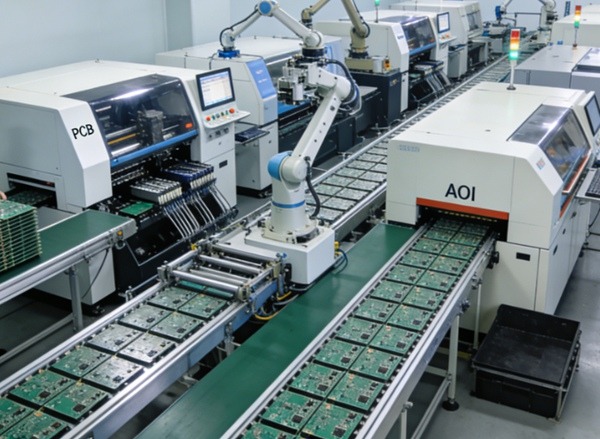
- Dedicated SMT lines
- Parallel inspection processes
- Essential testing (AOI + functional testing)
Testing methods:
PCBA Testing Methods Explained
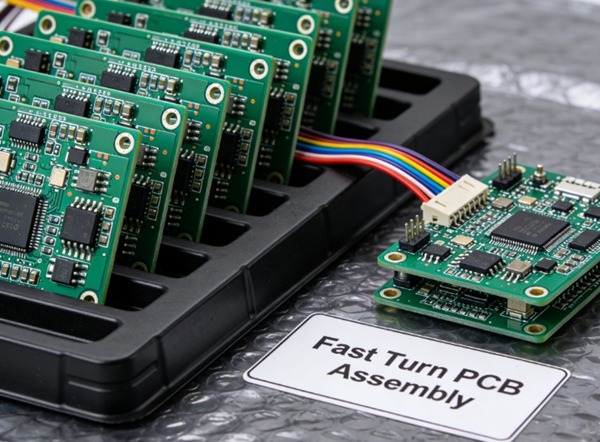
Risks of Fast Turn PCB Assembly
While speed is important, fast-turn PCBA carries potential risks:
- Limited component choices
- Higher component prices
- Reduced time for design changes
- Increased pressure on manufacturing
These risks must be managed carefully.
How to Reduce Risk in Fast Turn PCBA
Optimize Design for Speed
- Avoid unnecessary complexity
- Use standard packages
- Minimize THT components
Assembly methods:
SMT vs THT PCB Assembly
Provide Complete and Accurate Files
- Clean Gerber, BOM, and CPL files
- Clear assembly notes
- Approved substitutes
Choose Turnkey PCB Assembly
Turnkey PCBA reduces coordination delays and sourcing risks.
Turnkey model:
What Is Turnkey PCB Assembly and How It Works
Cost Considerations for Fast Turn PCB Assembly
Fast turn services may increase:
- Component costs
- Over time, production costs
- Expedited logistics costs
However, early market entry often offsets these additional expenses.
Industries That Rely on Fast Turn PCB Assembly
- Consumer electronics
- IoT and smart devices
- Automotive electronics
- Medical devices
- Industrial automation
Fast prototyping enables rapid innovation cycles.
Why Choose TOPFAST for Fast Turn PCB Assembly?
As a professional PCB manufacturer, TOPFAST provides:
- Fast DFM/DFA engineering response
- Stable component supply chain
- Advanced SMT and mixed-assembly lines
- Integrated testing and QC
- Reliable fast-turn project management
TOPFAST helps customers move from concept to working hardware faster.
Conclusion
Fast turn PCB assembly is the best solution when speed matters more than unit cost.
It is ideal for prototypes, engineering validation, and urgent product launches, where reducing development time delivers greater business value than cost savings.
However, fast-turn PCBA requires:
- Well-prepared design files
- Smart component selection
- An experienced manufacturing partner
By working with TOPFAST, customers achieve fast, reliable PCB assembly without compromising quality, enabling quicker decisions, faster innovation, and shorter time-to-market.
If your project is time-critical, fast turn PCB assembly is not a risk—it is a competitive advantage.
Fast Turn PCB Assembly FAQ
A: Prototype PCBA can be completed in as little as 24–72 hours for simple designs.
A: No, when managed by experienced manufacturers with controlled processes.
A: Yes, but often justified by faster validation and market entry.
A: It is mainly for prototypes and small batches, not mass production.
 EN
EN  PT
PT  AR
AR  DE
DE  FR
FR  ES
ES