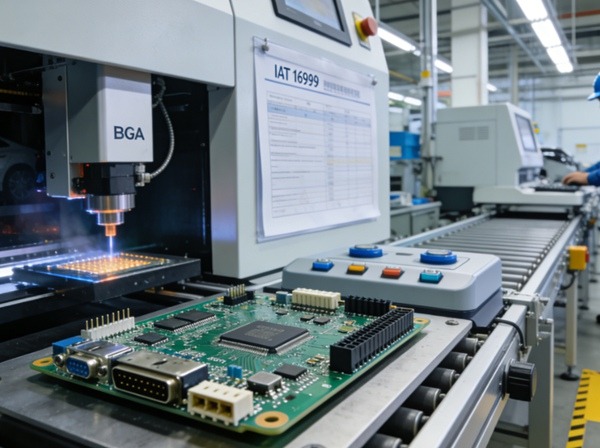
Different industries demand different PCB assembly standards.
Factors such as regulatory compliance, reliability, testing requirements, and traceability vary significantly across applications.
In this guide, TOPFAST, a professional PCB manufacturer, explains how industry-specific PCB assembly works and what customers should consider when selecting a PCBA partner.
Table of Contents
Why Industry-Specific PCB Assembly Matters
A PCB assembly solution suitable for consumer electronics may fail in:
- Medical devices
- Automotive systems
- Industrial control equipment
Industry-specific PCBA ensures:
- Regulatory compliance
- Long-term reliability
- Application-specific testing
- Controlled manufacturing processes
Medical PCB Assembly
Medical electronics require the highest reliability and traceability.
Key Requirements
- ISO 13485 quality system
- Component traceability
- Strict process control
- Functional and reliability testing
Typical Applications
- Diagnostic equipment
- Patient monitoring systems
- Medical imaging devices
Low-volume medical production:
High Mix Low Volume PCB Assembly
Industrial PCB Assembly
Industrial electronics operate in harsh environments.
Key Requirements
- High temperature resistance
- Long lifecycle components
- Conformal coating (optional)
- Extended functional testing
Typical Applications
- PLC systems
- Industrial automation
- Power control units
Production model:
Low Volume PCB Assembly
Automotive PCB Assembly
Automotive electronics must meet safety and reliability standards.
Key Requirements
- IATF 16949 (preferred)
- High vibration resistance
- Long-term supply assurance
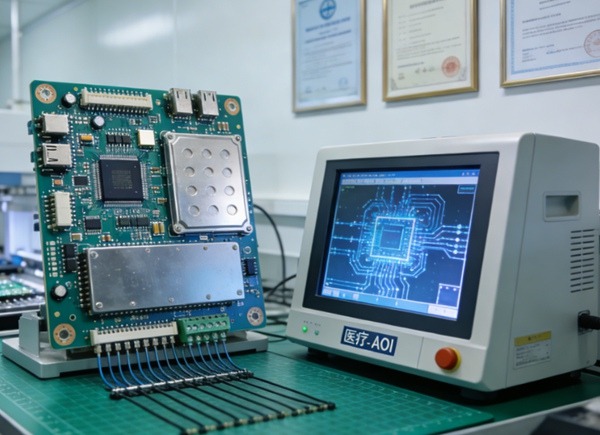
- Advanced inspection (AOI, X-ray)
Typical Applications
- ADAS systems
- EV control modules
- Infotainment systems
Production transition:
Prototype PCB Assembly
Aerospace & Defense PCB Assembly
This sector demands extreme reliability and documentation.
Key Requirements
- High-reliability materials
- Full traceability
- Extensive testing and documentation
- Controlled manufacturing environment
Typical Applications
- Avionics
- Communication systems
- Radar equipment
Key Differences by Industry
| Industry | Volume | Compliance | Testing Level | Lifecycle |
|---|---|---|---|---|
| Medical | Low–Medium | ISO 13485 | Very High | Long |
| Industrial | Low–Medium | Industry-specific | High | Long |
| Automotive | Medium–High | IATF 16949 | High | Very Long |
| Aerospace | Low | Military/AS | Extremely High | Very Long |
Common Challenges in Industry-Specific PCBA
- Component lifecycle management
- Regulatory documentation
- Customized testing requirements
- Traceability and record keeping
Experienced manufacturers reduce compliance risk.
Best Practices for Industry-Specific PCB Assembly
- Select manufacturers with industry experience
- Verify certifications and quality systems
- Align testing strategy with application risks
- Plan supply chain for long-term support
Service structure:
What Is Turnkey PCB Assembly and How It Works
Why Choose TOPFAST for Industry-Specific PCB Assembly?
As a professional PCB manufacturer, TOPFAST provides:
- Industry-focused PCBA solutions
- Flexible production models (prototype to production)
- Strict quality control and documentation
- Customized testing and inspection
- Long-term manufacturing support
TOPFAST understands that industry compliance is not optional—it is essential.
Conclusion
Industry-specific PCB assembly ensures that electronic products meet the reliability, safety, and compliance requirements of their target applications.
From medical devices to automotive systems, each industry demands tailored processes, testing, and documentation.
By working with TOPFAST, a professional PCB manufacturer, customers gain a trusted partner capable of delivering industry-compliant PCB assembly solutions, supporting products throughout their entire lifecycle.
Industry-Specific PCB Assembly FAQ
A: Yes, but only with proper processes, certifications, and experience.
A: It can be, due to testing, documentation, and compliance requirements.
A: Yes, with proper planning during prototype and low-volume stages.
A: Yes, when managed by experienced manufacturers.
 EN
EN  PT
PT  AR
AR  DE
DE  FR
FR  ES
ES