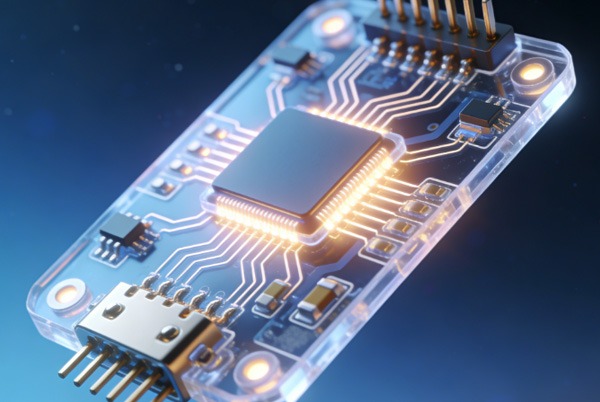
Printed Circuit Board Assembly (PCB Assembly or PCBA) is a critical step in transforming electronic designs into fully functional products. From prototypes to mass production, reliable PCB assembly services have a direct impact on product performance, cost, and time-to-market.
TOPFAST, a professional PCB manufacturer, offers comprehensive turnkey PCB assembly services, encompassing PCB fabrication, component sourcing, SMT & THT assembly, testing, and global delivery. This guide explains what PCB assembly is, how turnkey PCBA works, and how to choose the right PCB assembly partner.
Table of Contents
What Is PCB Assembly?
PCB Assembly (PCBA) is the process of mounting electronic components onto a fabricated printed circuit board to create a working electronic assembly.
A typical PCB assembly includes:
- Surface Mount Technology (SMT) assembly
- Through-Hole Technology (THT) assembly
- Mixed assembly for complex designs
- Inspection and functional testing
PCB assembly is often confused with PCB manufacturing. PCB manufacturing produces the bare board, while PCB assembly installs components onto it.
Related reading: PCB Manufacturing vs PCB Assembly: What’s the Difference?
Our PCB Assembly Capabilities
TOPFAST offers flexible PCB assembly solutions for both prototypes and production orders.
SMT PCB Assembly
- High-speed automated pick-and-place
- Supports BGA, QFN, LGA, and fine-pitch components
- Ideal for compact, high-density designs
THT & Mixed Assembly
- Manual and wave soldering
- Suitable for connectors, transformers, and power components
- Hybrid SMT + THT supported
Prototype & Low-Volume PCBA
- Fast turnaround for R&D and startups
- Engineering support and DFM/DFA review
High-Volume PCB Assembly
- Stable production lines
- Consistent quality and cost control
- Scalable capacity for mass production
As a professional PCB manufacturer, TOPFAST supports rigid, flex, and rigid-flex PCB assembly for a wide range of industries.

Turnkey PCB Assembly vs Consigned Assembly
One of the most important decisions when ordering PCBA is choosing between turnkey and consigned assembly.
Turnkey PCB Assembly
In turnkey PCB assembly, the manufacturer handles:
- PCB fabrication
- Component sourcing
- Assembly
- Testing and inspection
Advantages:
- Single point of responsibility
- Reduced procurement risk
- Faster overall lead time
- Ideal for startups and overseas customers
Consigned PCB Assembly
Customers supply all components, while the manufacturer only performs assembly.
Advantages:
- More control over component selection
- Useful for special or customer-owned parts
Learn more: What Is Turnkey PCB Assembly and How It Works
For most customers, turnkey PCBA offers better efficiency, lower risk, and predictable results.
PCB Assembly Process at TOPFAST
A well-controlled PCB assembly process ensures quality and reliability.
1. File Review & DFM/DFA Check
- Gerber, BOM, and Pick-and-Place file verification
- Design for Manufacturing (DFM) and Design for Assembly (DFA) analysis
Related guide: PCB Assembly File Requirements Explained
2. PCB Fabrication
- Material selection (FR4, Rogers, Aluminium, etc.)
- Layer stack-up and impedance control
3. Component Sourcing & Inspection
- Authorised suppliers and verified inventory
- Incoming quality control (IQC)
4. SMT & THT Assembly
- Solder paste printing
- Component placement
- Reflow soldering and wave soldering
5. Inspection & Testing
- Automated Optical Inspection (AOI)
- X-ray inspection for BGA
- Functional testing (FCT)
Related article: PCBA Testing Methods: AOI, X-Ray and Functional Test
6. Final Quality Control & Delivery
- Visual inspection
- Packaging and global shipping
PCB Assembly Cost & Lead Time
What Affects PCB Assembly Cost?
Several factors influence PCBA pricing:
- Board size and layer count
- Number of components
- SMT vs THT ratio
- BGA and fine-pitch parts
- Testing requirements
- Order quantity
Typical PCB Assembly Lead Time
- Prototype PCBA: 3–7 working days
- Small batch production: 7–14 working days
- Mass production: 2–4 weeks
Cost breakdown: PCB Assembly Cost Explained
Optimising BOM selection and performing early DFM checks can significantly reduce cost and lead time.
Industries We Serve
TOPFAST PCB assembly services support multiple industries, including:
- Consumer electronics
- Industrial control
- Automotive electronics
- Medical devices
- Telecommunications
- IoT and smart devices
Our engineering team understands the quality standards required for each application.

Why Choose TOPFAST for PCB Assembly?
- One-stop turnkey PCBA solutions
- Professional PCB manufacturing background
- Strict quality control and inspection
- Flexible order quantities
- Competitive pricing and reliable delivery
By combining manufacturing expertise with efficient assembly processes, TOPFAST helps customers reduce risk and accelerate product development.
PCB Assembly FAQ
A: You typically need Gerber files, BOM, Pick-and-Place (CPL) files, and assembly drawings.
Read more: PCB Assembly File Requirements
A: Lead time depends on order complexity and quantity. Prototype PCBA can be completed within days.
A: MOQ varies by project type. Prototypes can start from very low quantities.
A: Optimise BOM selection, avoid unnecessary fine-pitch parts, and perform DFM/DFA checks early.
See details: How to Reduce PCB Assembly Cost
A: AOI, X-ray inspection, and functional testing are commonly used to ensure quality.
Get Started with PCB Assembly Services
Whether you need a fast prototype or reliable mass production, TOPFAST provides professional PCB assembly services tailored to your project requirements.
Contact TOPFAST today to get a fast and accurate PCBA quotation.
 EN
EN  PT
PT  AR
AR  DE
DE  FR
FR  ES
ES