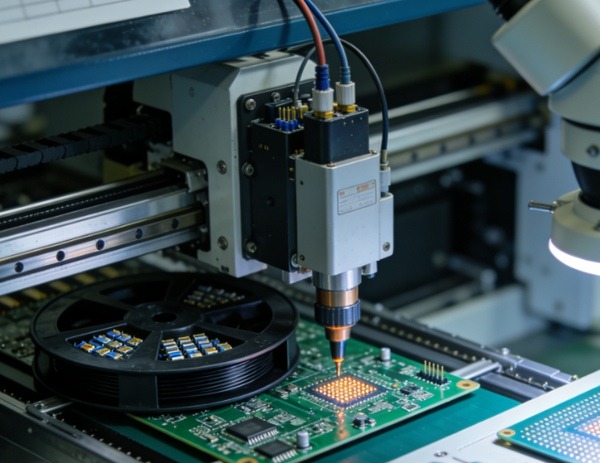
Low-volume PCB assembly plays a critical role between prototype PCB assembly and full-scale production.
It allows engineers and product teams to validate designs, stabilize supply chains, and prepare for mass manufacturing with reduced risk.
In this guide, TOPFAST, a professional PCB manufacturer, explains what low-volume PCB assembly is, how it works, when to use it, and how it differs from prototype and high-volume PCBA.
Table of Contents
What Is Low Volume PCB Assembly?
Low volume PCB assembly typically refers to assembling:
- 20 to 1,000 PCBs
- Using near-production processes
- With higher flexibility than mass production
It is commonly used after successful prototyping and before large-scale manufacturing.
Background reading:
Prototype PCB Assembly: From Design to Testing
Why Choose Low Volume PCB Assembly?
Low volume PCBA helps companies:
- Validate design stability
- Test products in real-world conditions
- Support pilot runs and early market launch
- Reduce risk before mass production
It is especially important for hardware startups and new product introductions (NPI).
Typical Applications of Low Volume PCBA
Low volume PCB assembly is widely used in:
- Pilot production runs
- Beta product releases
- Custom electronics
- Industrial and medical devices
- High-mix, low-volume manufacturing
Low Volume PCB Assembly Process
1. Design Freeze & Engineering Review
Compared to prototypes, low volume PCBA requires:
- Stable BOM
- Approved component alternatives
- Finalized PCB layout
DFM/DFA review ensures manufacturability at higher quantities.
Design readiness:
PCB Assembly File Requirements Explained
2. PCB Fabrication
Low volume PCBs often use:
- Production-grade materials
- Defined stack-ups
- Controlled impedance (if required)
This ensures consistency with future mass production.
Fabrication relationship:
PCB Manufacturing vs PCB Assembly
3. Component Procurement
Key sourcing strategies:
- Lifecycle-verified components
- Multi-source parts
- Buffer stock for critical components
This step reduces supply chain risk later.
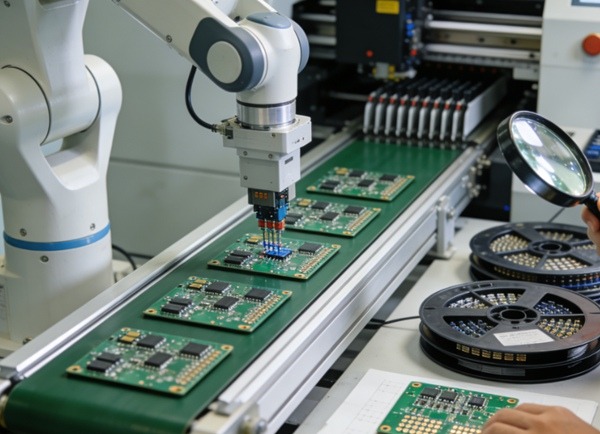
4. PCB Assembly & Inspection
Assembly methods include:
- Automated SMT assembly
- Selective THT soldering
- AOI inspection
- X-ray inspection (for BGA / QFN)
Assembly methods:
SMT vs THT PCB Assembly
5. Functional Testing
Testing becomes more structured:
- Functional testing (FCT)
- Burn-in testing (optional)
- Reliability sampling
Testing overview:
PCBA Testing Methods Explained
Low Volume PCB Assembly Lead Time
Typical lead times:
- Standard: 7–15 working days
- Fast turn: 5–7 working days
Lead time depends heavily on component availability.
Timing details:
PCB Assembly Lead Time Explained
Low Volume PCB Assembly Cost Factors
Cost is influenced by:
- Quantity and panelization
- Component sourcing strategy
- Testing requirements
- Assembly complexity
Although unit cost is higher than mass production, it is far lower than prototype-level cost.
Cost breakdown:
PCB Assembly Cost Explained
Low Volume vs Prototype vs Mass Production
| Aspect | Prototype PCBA | Low Volume PCBA | Mass Production |
|---|---|---|---|
| Quantity | 5–20 | 20–1,000 | 1,000+ |
| Focus | Validation | Stability | Cost efficiency |
| BOM | Flexible | Mostly fixed | Fully optimized |
| Testing | Debugging | Functional | ICT / FCT |
Low volume PCBA is the bridge between engineering and manufacturing.
Common Challenges in Low Volume PCB Assembly
- Component shortages
- Incomplete BOM validation
- Inconsistent testing standards
- Poor transition planning to mass production
Working with an experienced manufacturer minimizes these risks.
Best Practices for Low Volume PCB Assembly
- Lock BOM before ordering
- Approve alternative components
- Align testing with future production
- Choose a scalable PCB assembly partner
Service model:
What Is Turnkey PCB Assembly and How It Works
Why Choose TOPFAST for Low Volume PCB Assembly?
As a professional PCB manufacturer, TOPFAST provides:
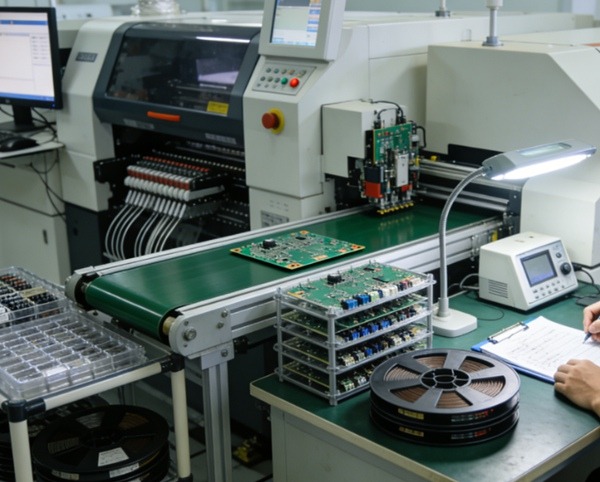
- Scalable SMT & THT assembly
- Flexible low-volume production lines
- Reliable component sourcing
- Production-level testing support
- Smooth transition to mass production
TOPFAST supports customers from prototype to production without disruption.
Conclusion
Low volume PCB assembly is the critical transition stage between prototype validation and mass production.
It enables companies to test real-world performance, stabilize designs, and prepare manufacturing processes without the risks of full-scale production.
By choosing TOPFAST, a professional PCB manufacturer, customers gain a reliable partner capable of supporting prototype, low volume, and production PCB assembly, ensuring a smooth and scalable manufacturing journey.
 EN
EN  PT
PT  AR
AR  DE
DE  FR
FR  ES
ES