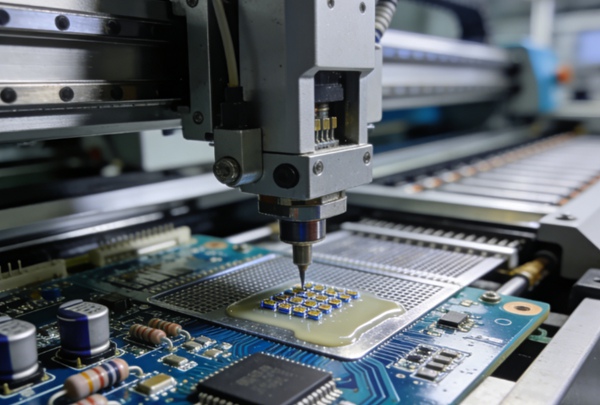
Choosing between SMT (Surface Mount Technology) and THT (Through-Hole Technology) is a critical decision in PCB assembly. Each method has unique advantages, limitations, and ideal use cases.
In this guide, TOPFAST, a professional PCB manufacturer, compares SMT vs THT PCB assembly in terms of process, cost, reliability, and applications to help you choose the right solution.
Table of Contents
What Is SMT PCB Assembly?
SMT (Surface Mount Technology) is a PCB assembly method where components are mounted directly onto the surface of the PCB.
Key Features of SMT:
- Small component size
- High component density
- Fully automated placement
- Suitable for mass production
SMT is the most widely used assembly method in modern electronics.
Related article:
What Is PCB Assembly? SMT, THT, and PCBA Explained
What Is THT PCB Assembly?
THT (Through-Hole Technology) involves inserting component leads through drilled holes and soldering them to pads on the opposite side.
Key Features of THT:
- Strong mechanical connection
- Better for high-current or high-stress components
- Partially manual or semi-automated
THT is still widely used in industrial and power electronics.
SMT vs THT PCB Assembly: Side-by-Side Comparison
| Aspect | SMT Assembly | THT Assembly |
|---|---|---|
| Component size | Small | Larger |
| Assembly speed | Very fast | Slower |
| Automation level | High | Medium |
| Mechanical strength | Moderate | High |
| PCB density | High | Low |
| Cost (volume) | Lower | Higher |
| Typical use | Consumer electronics | Industrial & power |
Manufacturing Process Differences
SMT Assembly Process
- Solder paste printing
- Automated component placement
- Reflow soldering
- AOI / X-ray inspection
Full process:
PCB Assembly Process Explained
THT Assembly Process
- Component insertion
- Wave soldering or selective soldering
- Visual inspection
In mixed assemblies, SMT is usually completed before THT.
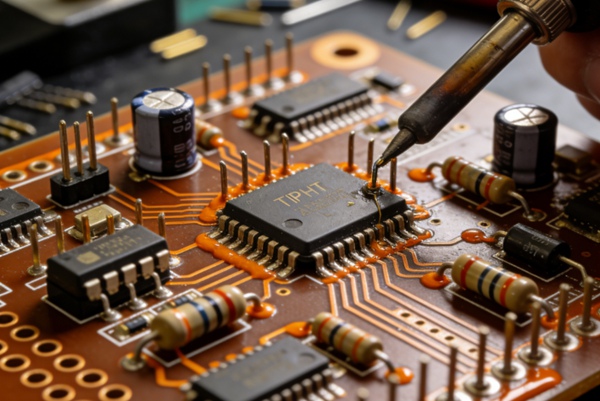
Cost Comparison: SMT vs THT
SMT generally offers lower assembly cost for medium to large volumes due to:
- Automation
- Reduced labor
- Smaller PCB size
THT costs are higher due to:
- Manual insertion
- Longer assembly time
Related guide:
PCB Assembly Cost Explained
Reliability & Mechanical Strength
- SMT is reliable for most consumer and digital electronics
- THT provides superior strength for connectors, transformers, and power components
- Automotive and industrial designs often combine both methods
When to Choose SMT PCB Assembly
Choose SMT if:
- Your design requires high component density
- You are producing large volumes
- Miniaturization is important
- Cost efficiency matters
When to Choose THT PCB Assembly
Choose THT if:
- Components experience mechanical stress
- High current or voltage is involved
- Connectors must withstand repeated insertion
Mixed SMT and THT Assembly
Many modern PCBs use mixed assembly, combining SMT for compact components and THT for power or mechanical parts.
Related article:
What Is Turnkey PCB Assembly and How It Works
SMT vs THT in Different Industries
- Consumer electronics – SMT
- Industrial control – Mixed
- Automotive electronics – Mixed
- Medical devices – SMT + selective THT
- Power electronics – THT
TOPFAST supports all assembly combinations with strict quality control.
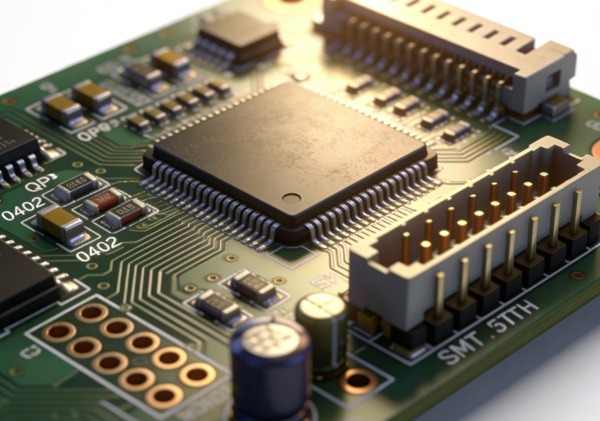
Why Choose TOPFAST for SMT & THT PCB Assembly?
As a professional PCB manufacturer, TOPFAST provides:
- Advanced SMT lines
- Experienced THT assembly teams
- Mixed-technology assembly support
- AOI and X-ray inspection
- Turnkey and consigned PCBA options
SMT vs THT PCB Assembly FAQ
A: No. THT is still essential for power and mechanical components.
A: Yes. Mixed assembly is very common.
A: Both are reliable when properly designed and assembled.
A: SMT is generally more cost-effective for higher volumes.
Final Thoughts
Both SMT and THT PCB assembly have important roles in electronics manufacturing. The right choice depends on design requirements, application, and production volume.
By working with TOPFAST, customers can select the optimal assembly method and ensure high-quality PCB assembly from prototype to production.
 EN
EN  PT
PT  AR
AR  DE
DE  FR
FR  ES
ES