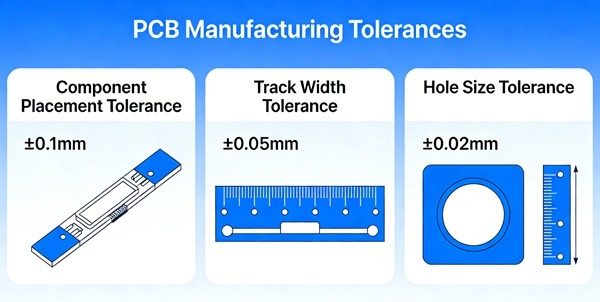
تحدد تفاوتات تصنيع ثنائي الفينيل متعدد الكلور مقدار التباين المسموح به أثناء عملية التصنيع.
تؤثر بشكل مباشر على العائد والتكلفة والموثوقية وقابلية التصنيع.
العديد من مشكلات PCB لا تنتج عن سوء التصنيع، بل عن تصميمات تتجاوز حدود التسامح الواقعية.
في هذا الدليل، توب فاست، وهي شركة متخصصة في تصنيع لوحات الدوائر المطبوعة (PCB)، تشرح أهم التفاوتات المسموح بها في تصنيع لوحات الدوائر المطبوعة (PCB) وتأثيرها على الإنتاج، وكيف يمكن للمصممين تحقيق التوازن بين الأداء والتكلفة.
جدول المحتويات
ما هي تفاوتات تصنيع ثنائي الفينيل متعدد الكلور؟
تشير تفاوتات تصنيع ثنائي الفينيل متعدد الكلور إلى الاختلافات المقبولة في الأبعاد والعمليات التي تحدث أثناء التصنيع.
نظرًا لأن تصنيع ثنائي الفينيل متعدد الكلور ينطوي على عمليات كيميائية وحرارية وميكانيكية، التباين الصفري مستحيل.
تحدد التفاوتات المقبولة مستوى التباين الذي يعتبر مقبولاً دون التأثير على الوظائف أو الموثوقية.
لماذا تعتبر تفاوتات تصنيع ثنائي الفينيل متعدد الكلور مهمة
تجاهل التفاوتات التصنيعية يمكن أن يؤدي إلى:
- انخفاض إنتاجية الإنتاج
- زيادة تكلفة التصنيع
- التأخيرات الناجمة عن مراجعات DFM
- مشاكل الموثوقية والتجميع
التصاميم التي تتوافق مع قدرات التصنيع أسهل وأسرع وأكثر اقتصادية في الإنتاج.
التفاوتات الحرجة في تصنيع ثنائي الفينيل متعدد الكلور التي يجب أن تعرفها
فيما يلي أهم فئات التفاوت في تصنيع ثنائي الفينيل متعدد الكلور.
عرض التتبع وتفاوت التباعد
الوصف:
التباين في عرض مسارات النحاس والمسافات بينها الناتج عن عمليات الحفر والتصوير.
لماذا هذا مهم:
- يؤثر على السعة الحالية
- تأثيرات المعاوقة المتحكم بها
- يزيد من خطر الفتح أو البيع على المكشوف
نصيحة التصميم:
تجنب تصميم مسارات عند الحدود الدنيا المطلقة ما لم يكن ذلك ضروريًا للأداء.
حجم الثقب وتفاوت الحفر
الوصف:
الانحراف بين حجم الثقب المصمم وحجم الثقب المطلي النهائي.
لماذا هذا مهم:
- يؤثر على ملاءمة المكونات
- التأثيرات من خلال الموثوقية
- تؤثر على جودة الطلاء
نصيحة التصميم:
ضع في اعتبارك دائمًا حجم الثقب النهائي، وليس حجم مثقاب الحفر.
تفاوت الحلقة الحلقية
الوصف:
الحد الأدنى لعرض النحاس حول ثقب محفور.
لماذا هذا مهم:
- يمنع الانكسار أثناء الحفر
- يضمن موثوقية التلبيس
نصيحة التصميم:
تحسن الحلقات الحلقية الأكبر حجماً من العائد والموثوقية بشكل ملحوظ.
تفاوت سماكة اللوح
الوصف:
التباين في السماكة الإجمالية للثنائي الفينيل متعدد الكلور بعد التصفيح.
لماذا هذا مهم:
- تأثيرات التحكم في المعاوقة
- يؤثر على توافق الموصل
- يؤثر على القوة الميكانيكية
نصيحة التصميم:
حدد تفاوت السماكة فقط عند الضرورة.
تفاوت محاذاة قناع اللحام
الوصف:
عدم التوافق بين فتحات قناع اللحام والوسادات النحاسية.
لماذا هذا مهم:
- يمكن أن يكشف عن آثار
- يسبب توصيلات اللحام
- يؤثر على إنتاجية التجميع
نصيحة التصميم:
توفير مسافة كافية بين قناع اللحام والوسادات.
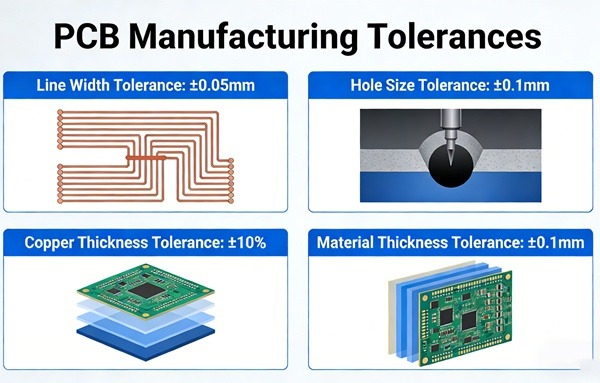
تفاوتات تصنيع ثنائي الفينيل متعدد الكلور مقابل التكلفة
تتطلب التفاوتات الأكثر دقة مزيدًا من التحكم في العمليات والتفتيش، وأحيانًا انخفاضًا في الإنتاجية.
| مستوى التسامح | صعوبة التصنيع | تأثير التكلفة |
|---|---|---|
| قياسي | منخفضة | منخفضة |
| معتدل | متوسط | متوسط |
| ضيق | عالية | عالية |
غالبًا ما يؤدي التصميم بتفاوتات ضيقة غير ضرورية إلى زيادة التكلفة دون تحسين الأداء.
التفاوتات القياسية مقابل التفاوتات المتقدمة في لوحات الدوائر المطبوعة
لا تتطلب جميع لوحات الدوائر المطبوعة نفس مستوى التسامح.
مركبات ثنائي الفينيل متعدد الكلور القياسية
- الإلكترونيات الاستهلاكية
- لوحات التحكم الصناعية
- مصادر الطاقة
لوحات الدوائر المطبوعة المتقدمة
- HDI تصاميم
- دوائر رقمية عالية السرعة
- لوحات الترددات اللاسلكية والموجات الدقيقة
تتطلب التطبيقات المتقدمة تفاوتات أقل، ولكن فقط في المجالات الحرجة، وليس عبر التصميم بأكمله.
كيف تدير TOPFAST تفاوتات تصنيع لوحات الدوائر المطبوعة
بصفتنا مصنعًا محترفًا للوحات الدوائر المطبوعة (PCB)، توب فاست يتحكم في التفاوتات من خلال:
- مراجعة التصميم المدفوعة بـ DFM
- مطابقة قدرة العملية
- تحسين اختيار المواد
- التحكم الإحصائي في العمليات
- التفتيش المركّز على الخطوات عالية المخاطر
يضمن هذا النهج جودة مستقرة دون زيادة غير ضرورية في التكاليف.
كيف يمكن للمصممين تحسين التفاوتات
لتحقيق أفضل توازن بين الأداء وقابلية التصنيع:
- التصميم وفقًا للقدرة، وليس وفقًا للحدود المطلقة
- قم بتشديد التفاوتات فقط عند الضرورة من الناحية الكهربائية
- توضيح المتطلبات الأساسية بوضوح
- إشراك الشركة المصنعة في مرحلة مبكرة من التصميم
غالبًا ما يوفر التعاون المبكر الوقت والتكلفة لاحقًا.
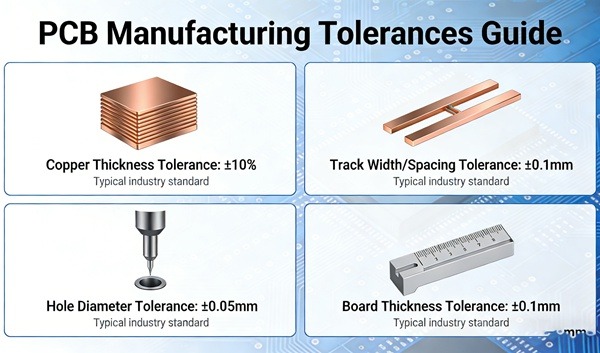
تفاوتات تصنيع ثنائي الفينيل متعدد الكلور وعائد التجميع
تؤثر تفاوتات التصنيع بشكل مباشر على تجميع ثنائي الفينيل متعدد الكلور الأداء:
- يؤدي عدم محاذاة الوسادة إلى زيادة عيوب اللحام
- يؤثر الالتواء على إنتاجية BGA
- تأثيرات التسامح على أداء التخفيف الحراري
تؤدي التفاوتات الثابتة في التصنيع إلى زيادة إنتاجية التجميع وتقليل الأعطال الميدانية.
الخاتمة
تحدد تفاوتات تصنيع ثنائي الفينيل متعدد الكلور الحد الفاصل بين التصميم القابل للتصنيع والتصميم غير القابل للتصنيع.
من خلال فهم حدود التسامح والتصميم وفقًا لذلك، يمكن للمهندسين تقليل التكلفة وتحسين العائد وضمان إنتاج موثوق.
مع قوة سوق دبي المالي عمليات التصنيع المدعومة والمنظمة، توب فاست يساعد العملاء على تحقيق التوازن الأمثل بين الأداء وقابلية التصنيع.
الأسئلة الشائعة (FAQ)
ج: ارتفاع تكاليف الإنتاج وانخفاض العائد بسبب قيود العملية.
ج: لا. يجب أن تتوافق التفاوتات مع المتطلبات الوظيفية، وألا تتجاوزها دون داعٍ.
ج: يمكن إجراء بعض التعديلات، ولكن التغييرات الكبيرة تتطلب عادةً تعديل التصميم.
ج: فقط للمعلمات التي تعتبر حاسمة للأداء أو التجميع.
 AR
AR  EN
EN  PT
PT  DE
DE  FR
FR  ES
ES